Mental rehearsal is one of the oldest tools in elite sport. Long before sports psychology became a formal discipline, athletes were closing their eyes before competition and running through their performance in their heads. What has changed is the science. Decades of evidence now show that structured visualization is not just psychological positive thinking — it produces measurable changes in your brain and your performance.
For professional and elite athletes, the gap between athletes who use visualization deliberately and athletes who treat it as an afterthought is meaningful. The techniques that work are not vague “see yourself winning” exercises. Instead, they are specific, structured protocols that train the same brain regions your body uses during real performance.
This article covers what visualization actually is, what the evidence shows, and how to use it as a professional or elite athlete to sharpen skills, prepare for high-pressure moments, and improve decision-making under fatigue.
When you visualize a movement in detail, your brain activates many of the same brain regions used during real movement. This is one of the most important findings in sports psychology and neuroscience. The regions involved in planning and executing movement are all engaged during vivid mental rehearsal — including the parts of your brain that fire when you actually move.
In practical terms, this means visualization is not just “thinking about it.” It is partial brain training. You are activating the same circuits you would use in physical practice, just at a lower intensity and without the physical execution.
The overlap between imagined and actual movement explains why visualization produces real performance benefits:
In other words, visualization gives you additional repetitions of skill, decision-making, and emotional preparation — without the physical cost of actual training.
Effective visualization is not vague mental imagery. It has specific characteristics:
The athletes who get the most from visualization are not the ones with the most vivid imaginations. Instead, they are the ones who practice these specific elements consistently.
Key Takeaway
✔ Visualization activates many of the same brain regions used during real movement, making it a form of partial brain training. The most effective visualization is first-person, multi-sensory, real-time, and detailed — not vague positive imagery.
The strongest evidence base for visualization is in skill learning and movement performance. Mental practice consistently improves performance across a wide range of skills — including technical execution, accuracy, and movement timing — across virtually every sport that has been tested.
The effects are largest when visualization is combined with physical practice rather than used in place of it. In other words, mental practice plus physical practice consistently outperforms physical practice alone.
Visualization also has strong evidence for psychological benefits:
For professional athletes, these effects matter as much as the skill benefits. The difference between performing at your level and performing below it under pressure is often a matter of state regulation rather than technical capacity.
Emerging evidence also supports visualization for performance under fatigue. Athletes who mentally rehearse performance under tired or pressured conditions show better real-world performance in those same conditions. This applies to endurance events, late-game decision-making in team sports, and sustained performance across long competitions.
One of the most underused applications is in injury recovery. Structured visualization during a layoff can reduce loss of skill and accelerate return to play. Athletes who continue mental practice during injury maintain movement patterns more effectively than those who do not.
In some cases, visualization can even slow strength loss during periods of physical inactivity. Although physical training will always be more effective, visualization gives injured athletes a way to keep training mentally when their body cannot.
Key Takeaway
✔ The evidence supports visualization for skill acquisition, confidence, anxiety regulation, performance under fatigue, and injury recovery. The benefits are largest when visualization complements physical training rather than replaces it.
The most common form of visualization involves rehearsing specific technical or tactical skills. You mentally execute the movement, decision, or sequence you want to perform, paying attention to technique, timing, and feel.
In practice, this works for:
How to use it: 5 to 10 minutes daily, focused on a specific skill or sequence. The mental rehearsal should match the speed and detail of actual execution.
Pre-competition visualization is broader than skill rehearsal. It includes the venue, opponents, conditions, your warm-up, and the early phases of competition. It serves to mentally rehearse the environment so that nothing during competition feels unexpected.
How to use it: 10 to 20 minutes the night before competition or in the hours before, depending on what works for you. Include both the smooth flow of competition and how you would respond to setbacks (a poor start, a mistake, an opponent’s strong performance).
A more advanced application is visualizing high-pressure scenarios specifically. You imagine yourself in difficult situations — facing a strong opponent at a critical moment, performing while tired, recovering from a bad mistake — and rehearse how you respond.
This works because it builds emotional and mental familiarity with pressure. When the real situation arrives, your nervous system has already practiced handling it.
How to use it: regularly throughout the season, with specific focus on the kinds of pressure you actually face in competition.
For injured athletes, visualization serves as a way to keep training mentally during physical layoffs. Mentally rehearsing skills, sequences, and competitions during the rehabilitation period reduces the loss of skill and supports return to play.
How to use it: structured daily practice during injury, focused on the specific skills and decisions of your sport. This is often best done with the support of a sports psychologist or coach.
Key Takeaway
✔ Different types of visualization serve different goals — skill rehearsal, pre-competition preparation, pressure scenarios, and injury recovery. Each one uses the same underlying mechanisms but applies them to different aspects of performance.
The athletes who get the most from visualization are not the ones who do it for hours occasionally. Instead, they are the ones who practice consistently in shorter daily blocks. 5 to 15 minutes per day produces meaningful effects when done regularly.
Longer sessions (20 to 30 minutes) work well in specific contexts — pre-competition preparation, recovery from setbacks, deep skill work — but daily short practice is the foundation.
For a professional athlete who wants to integrate visualization systematically:
Daily: 5 to 10 minutes of skill or sequence rehearsal, ideally at a consistent time (morning or evening works well for most athletes)
Pre-training: 2 to 5 minutes mentally rehearsing the key skills or sequences you will work on in the session
Pre-competition: 10 to 20 minutes the night before or in the hours before, covering the venue, opponents, your performance, and how you respond to setbacks
Post-competition: Brief reflection and re-visualization of moments you want to consolidate (good performances) or learn from (mistakes)
During injury or layoff: Structured daily practice (15 to 30 minutes) focused on maintaining skill and movement patterns
For athletes new to structured visualization, the practical approach is:
Athletes who work with a sports psychologist or mental performance coach typically progress faster than those who try to figure it out alone. This is one of the areas where professional support produces the best return.
| Application | Duration | Frequency |
|---|---|---|
| Daily skill rehearsal | 5–10 min | Daily |
| Pre-training rehearsal | 2–5 min | Before sessions |
| Pre-competition preparation | 10–20 min | Night before / day of |
| Pressure scenario practice | 10–15 min | Weekly |
| Injury recovery practice | 15–30 min | Daily during layoff |
Key Takeaway
✔ A complete visualization program is built on short daily practice, with longer targeted use before competition, during pressure scenario training, and through injury recovery. Consistency matters far more than session length, and professional support accelerates progress for most athletes.
The biggest mistake is treating visualization as something you do before a big competition, not as a daily practice. The brain and psychological benefits come from repeated practice — not from occasional sessions before high-stakes moments.
Generic “see yourself winning” imagery does not produce the same benefits as specific, detailed mental rehearsal. The more specific the visualization — opponent, venue, conditions, technique, decisions — the more effective it tends to be.
Some athletes default to watching themselves on a mental video. However, the evidence suggests that first-person visualization (seeing through your own eyes) produces stronger brain activation than third-person visualization. First-person should be the default.
Always rehearsing perfect performance leaves you unprepared for setbacks. Including how you respond to mistakes, poor starts, and unexpected challenges builds the resilience to handle them in real competition.
Most athletes who try to learn visualization on their own give up before it becomes effective. Working with a sports psychologist or mental performance coach significantly increases the likelihood of building a consistent, productive practice.
Key Takeaway
✔ The most common mistakes are doing it occasionally, being too vague, watching from outside, only rehearsing perfect outcomes, and trying to learn it without professional support. Each one is correctable with deliberate attention.
Visualization is not a soft skill. It is a structured form of training that activates many of the same brain regions used during real performance. The evidence supports its use for skill development, confidence, anxiety regulation, decision-making under pressure, and injury recovery.
For professional and elite athletes, the difference between athletes who use visualization deliberately and those who don’t is measurable. The athletes who get the most from it are not the ones who try every technique once. Instead, they are the ones who practice consistently — short daily blocks, targeted pre-competition use, and structured support during difficult periods.
Visualization costs nothing. It requires no equipment beyond a quiet space and consistent attention. For athletes who treat performance seriously, building structured visualization into the training week is one of the highest-return practices available.
Key Takeaway
✔ Visualization is a structured brain training tool, not positive thinking. For professional and elite athletes who practice it consistently, it produces measurable improvements in skill, confidence, pressure management, and recovery — at minimal cost and time investment.
Sodium is one of the most aggressively marketed nutrients in sports today. Electrolyte products, salt tablets, hydration systems with personalized sodium concentrations — the industry message is clear: more sodium equals better performance.
However, the evidence tells a more complicated story. Sodium genuinely matters for hydration, blood volume, drinking behavior, and protection against hyponatremia (dangerously low blood sodium). But the direct evidence that taking sodium during training or competition improves performance is surprisingly thin — and most of what does exist comes from cool conditions, with one-size-fits-all doses, and not in elite athletes.
For professional and elite athletes, this matters. Sodium decisions affect what you drink, when, and how much — and getting them wrong in either direction (too little or too much) carries consequences. The right approach builds on what sodium actually does, not on what marketing claims it does.
This article covers what the evidence shows, where the gaps are, and how to think about sodium as a professional athlete.
Sodium is the main electrolyte that controls how your body holds onto fluid. When you drink water without sodium, much of it passes through your system and out as urine. In contrast, when you drink fluid with sodium, your body retains more of it — keeping more of the fluid in your bloodstream where it supports performance.
For an athlete, this matters because:
Sodium also drives thirst. When sodium levels in your blood rise (which happens naturally when you sweat heavily), your body triggers the urge to drink. As a result, sodium-containing drinks tend to make athletes drink more — which is often where the practical benefit shows up during long sessions.
In other words, part of sodium’s value is indirect: it helps you drink enough.
Hyponatremia is one of the most serious nutrition-related risks in long-duration sport. It usually develops when athletes drink large volumes of plain water during prolonged efforts without replacing the sodium they lose through sweat.
The consequences range from mild (nausea, headache, confusion) to severe (seizures, brain swelling, death). Marathon runners, ultra-endurance athletes, and athletes in long hot competitions face the highest risk.
Sodium intake during long efforts — alongside sensible fluid intake — is one of the most reliable ways to prevent this.
Key Takeaway
✔ Sodium genuinely supports fluid retention, blood volume, the drive to drink, and protection against hyponatremia. These are real benefits — but they are not the same thing as a direct performance boost.
Despite the heavy marketing of sodium for athletes, surprisingly little direct evidence exists on whether sodium during training or competition actually improves performance. The available evidence carries important limitations. None of it has used hot conditions, and none has personalized sodium replacement based on individual sweat losses. As a result, the available evidence does not reflect how professional and elite athletes would actually use sodium today.
When the existing evidence holds up to careful examination, only one trial has shown a direct performance benefit from sodium — and that finding has significant problems with how the trial was set up, making the result unreliable. The remaining evidence either shows no clear performance benefit, or shows differences that hydration explains better than sodium itself.
Another way researchers have tried to detect performance benefits comes from measuring perceived effort at a fixed workload. If sodium reduces how hard a session feels at the same intensity, it might suggest a performance benefit. However, this approach has also failed to show consistent differences when athletes train with or without added sodium.
When sodium does seem to help performance, the benefit appears to work indirectly — driven by better hydration. Sodium-containing drinks make athletes drink more, and drinking more is what supports performance. When fluid intake matches between sodium and non-sodium conditions, the sodium itself does not produce a measurable performance difference.
In other words, the strongest signal in the literature is that sodium helps you drink — and drinking helps performance.
Key Takeaway
✔ The direct evidence that sodium improves performance is surprisingly thin. The available evidence has not used hot conditions or personalized doses, and most shows no clear direct benefit. The strongest signal is indirect: sodium helps athletes drink more, and better hydration helps performance.
Despite the limited direct performance evidence, several clear situations exist where sodium genuinely matters for professional and elite athletes.
For sessions lasting 90 minutes or more — particularly in endurance events, long matches, or extended training blocks — sodium replacement becomes increasingly important. Sweat losses accumulate, plain water intake without sodium starts to dilute blood sodium levels, and the risk of hyponatremia rises.
For these efforts, sodium-containing drinks (sports drinks, oral rehydration solutions, electrolyte tablets in water) are not optional. They form part of a sensible fueling and hydration strategy.
Sweat losses in hot and humid conditions can climb to 2 to 3 liters per hour or more in elite athletes. As a result, sodium losses scale with them. In these conditions, sodium-containing fluids support drinking behavior, fluid retention, and hyponatremia prevention.
This is also where the direct performance evidence is weakest — because the available evidence has not tested sodium for performance in hot conditions. Applying sodium in these contexts rests on solid physiology and a strong safety argument, not on direct performance evidence.
Athletes vary enormously in both sweat rate and sweat sodium concentration:
For these athletes, sodium replacement matters — and individual sweat testing is the best way to know exactly how much they need. Visible salt residue on skin or kit after training is one practical sign of high sweat sodium.
Post-session rehydration works much better with sodium than with plain water alone. Replacing 125 to 150% of fluid losses with sodium-containing drinks (or fluid alongside salty foods) is one of the most well-supported recovery practices in sports nutrition.
For athletes facing back-to-back sessions or congested competition schedules, this matters more than for those with full days between efforts.
| Situation | Sodium Priority | Practical Approach |
|---|---|---|
| Sessions under 60 minutes | Low | Water is usually enough |
| 60–90 minutes, moderate conditions | Moderate | Sports drink optional |
| 90+ minutes or hot conditions | High | Sodium-containing fluids essential |
| Heavy/salty sweater | High | Individual sweat testing, deliberate replacement |
| Recovery between same-day or next-day sessions | High | Sodium with rehydration fluid |
Key Takeaway
✔ Sodium matters most for long sessions, hot conditions, heavy or salty sweaters, and recovery between sessions. For shorter efforts in moderate conditions, sodium intake during training matters far less than overall hydration and fueling.
The single most important step is knowing your own sweat rate and sweat sodium concentration:
Without this data, sodium decisions are guesses. With this data, sodium decisions become precise.
Different situations call for different approaches:
Short sessions (under 60 minutes), moderate conditions. Plain water is usually enough. Sodium intake at meals provides what your body needs across the day.
Sessions 60 to 90 minutes. Sports drinks with moderate sodium (300 to 700 mg/L) work well, particularly if intensity is high or conditions are warm.
Long sessions (90+ minutes) or hot conditions. Sodium-containing fluids are essential. For heavy sweaters, oral rehydration solutions (higher sodium content, around 1,000+ mg/L) may work better than standard sports drinks.
Heavy or salty sweaters. Higher sodium replacement during training and competition, alongside attention to dietary sodium intake. Individual sweat testing makes the strategy precise rather than guessed.
Recovery. Include sodium with all post-session fluid intake — through sports drinks, oral rehydration solutions, or fluid alongside salty foods.
The marketing message of “more sodium is always better” does not match the evidence. Excessive sodium intake during training can cause gut problems, bloating, and gut discomfort. Taking sodium when you do not need it adds nothing to performance.
Sensible sodium intake matched to the situation is the goal — not maximizing sodium for its own sake.
Key Takeaway
✔ Sodium decisions should start with individual sweat testing and match sodium intake to the situation. More is not always better — the goal is the right amount for the conditions, the duration, and your individual physiology.
Sodium genuinely matters for fluid retention, blood volume, the drive to drink, recovery, and protection against hyponatremia. These are real, well-supported benefits. However, the direct evidence that sodium intake during training or competition improves performance — beyond its role in supporting hydration — is surprisingly thin.
For professional and elite athletes, this means treating sodium as a tool, not a magic ingredient. The right amount, in the right situation, supports hydration and protects against the consequences of heavy sweating. The wrong amount — too little for heavy sweaters, or too much for short sessions in moderate conditions — adds nothing or actively causes problems.
The athletes who get sodium right are not the ones who follow generic recommendations or marketing claims. Instead, they are the ones who know their individual sweat rate and sodium losses, match their sodium intake to the situation, and treat sodium as one component of a complete hydration and fueling strategy.
Key Takeaway
✔ Sodium plays a genuine role in hydration, fluid retention, and hyponatremia prevention — but the direct performance evidence is far weaker than marketing claims suggest. For professional and elite athletes, the right approach is individual sweat testing, matched intake to the situation, and an honest read of what sodium actually does.
Breathing is one of the few automatic functions you can also control deliberately. However, most athletes never use that control. Instead, they let their breathing follow whatever physical and emotional state they happen to be in — fast and shallow under pressure, irregular under fatigue, mouth-dominant during effort.
However, structured breathing techniques can change that. Specifically, they can shift your nervous system, sharpen your focus, regulate your stress response, support recovery, and in some cases directly improve performance. The evidence behind these effects ranges from strong (breathing muscle training, slow-paced breathing for stress regulation) to emerging (Oxygen Advantage-style nasal breathing and CO2 tolerance work) to mechanistically sound but less directly studied in elite sport (box breathing, physiological sighs).
For professional and elite athletes, breathwork is not a magic bullet. However, it is one of the cheapest, most accessible, and most underused tools available — particularly for managing pressure, sharpening focus before competition, and supporting recovery between sessions.
This article covers the techniques with the strongest evidence, what each one actually does, and how to use them in a professional athlete’s week.
Your nervous system has two main branches that govern your physical and mental state. One branch drives the “fight or flight” response that gears you up for action — elevated heart rate, faster breathing, alertness, tension. The other branch drives the “rest and recover” state — lower heart rate, slower breathing, recovery, calm focus.
Breathing is one of the most direct ways to shift between these states. For example, fast, shallow breathing pushes you toward the action side. In contrast, slow, controlled breathing through the nose pulls you toward the recovery side.
For an athlete, this matters for several reasons:
As a result, breathing gives you a deliberate lever on all of these.
A second key concept is CO2 tolerance. When CO2 builds up in your blood during effort or breath-holding, it creates the “air hunger” sensation that makes you want to breathe harder.
For most athletes, low CO2 tolerance shows up as breathlessness that arrives earlier than it should, or breathing that feels uncontrolled under pressure. Therefore, training your CO2 tolerance — through nasal breathing, slow exhales, and structured breath-holding — can reduce this sensation and improve breathing efficiency.
Breathing directly influences how clearly you think. Specifically, slow, controlled breathing improves attention, working memory, and emotional control. This matters for any sport requiring tactical decision-making, technical execution under pressure, or sustained mental focus across long sessions.
Key Takeaway
✔ Breathing directly affects your nervous system state, your stress response, your CO2 tolerance, and your focus. As a result, deliberate breathing techniques give athletes a fast, accessible lever on all of them.
Slow-paced breathing — sometimes called coherent breathing or resonance breathing — involves slowing your breath to around 6 breaths per minute. In practice, this typically looks like a 5-second inhale through the nose and a 5-second exhale through the nose or mouth.
This is one of the most studied breathing techniques in human physiology. Specifically, slow-paced breathing at around 6 breaths per minute consistently produces:
The evidence base spans clinical, military, and athletic populations. Furthermore, this is the breathing pattern most often used in heart rate variability training — where you use HRV measurements as real-time feedback.
Pre-competition stress management. 5 to 10 minutes of slow-paced breathing in the hour before competition can reduce excess arousal without dulling performance readiness.
Post-session recovery. 10 minutes after a hard session can speed the shift into recovery mode, supporting recovery and sleep onset.
Before sleep. 10 minutes of slow-paced breathing in bed reduces sleep onset time and improves sleep quality, particularly during high-stress periods.
Daily practice. 10 to 20 minutes per day, ideally in the morning or evening, builds the underlying capacity over time.
Key Takeaway
✔ Slow-paced breathing (6 breaths per minute) has the strongest evidence base of any breathing technique for nervous system regulation, focus, and stress management. As a result, 5 to 10 minutes pre-competition, post-session, or before sleep produces meaningful effects.
Box breathing follows a four-part rhythm: inhale for 4 seconds, hold for 4 seconds, exhale for 4 seconds, hold for 4 seconds. Specifically, it is simple, easy to learn, and quickly accessible in high-pressure settings.
Box breathing is widely used in military settings (notably by US Navy SEALs) and increasingly in professional sport. The direct sport-specific trial evidence is more limited than for slow-paced breathing. However, the underlying mechanism is well-supported — it activates the recovery side of your nervous system, builds CO2 tolerance through the breath-holds, and provides a structured focus point during high-arousal moments.
In-competition reset. Between points, sets, plays, or rounds — wherever your sport gives you a structured break — 1 to 2 cycles of box breathing can rapidly reset focus and reduce arousal.
Pre-competition focus. 5 minutes in the warm-up area helps establish a controlled, focused state before competition.
During high-pressure moments. Between attempts in skill-based sports (golf, tennis serves, free throws, penalty kicks) box breathing provides a structured pattern that displaces racing thoughts.
The simplicity is part of the value. Specifically, you do not need to learn complex techniques — you need a tool you can use under pressure, and box breathing meets that bar.
Key Takeaway
✔ Box breathing (4-4-4-4) is a simple, structured technique with strong supporting mechanism and widespread use in elite sport and military settings. As a result, it works particularly well as an in-competition reset and during high-pressure moments.
The physiological sigh involves two inhales through the nose followed by one long exhale through the mouth. Specifically, the second inhale is shorter than the first, and the exhale is significantly longer than either inhale.
The mechanism behind the physiological sigh is well-established. Specifically, the second inhale re-inflates collapsed air sacs in your lungs, and the long exhale produces rapid activation of your nervous system’s recovery side. As a result, the technique has gained widespread attention in elite sport and the broader performance community over the past several years.
A short daily practice of physiological sighing can reduce anxiety and improve mood, with effects that appear faster than other breathing techniques. Therefore, it has earned a place in the practical toolkit of athletes managing in-competition stress.
Acute stress reduction. When you need to drop arousal quickly — between plays, before a key moment, or after a high-pressure decision — 1 to 3 physiological sighs produce a fast effect.
Mid-session reset. A few physiological sighs during a break can reset your state more quickly than longer techniques.
Daily practice. A few minutes per day can improve stress management over time.
In contrast to box breathing or slow-paced breathing, the physiological sigh works in seconds rather than minutes. As a result, it is one of the most useful tools for in-competition stress management.
Key Takeaway
✔ The physiological sigh (two inhales through the nose, one long exhale through the mouth) is one of the fastest evidence-supported tools for acute stress reduction. Therefore, it suits in-competition moments where you need to drop arousal in seconds.
Nasal breathing is the foundation of the Oxygen Advantage approach developed by Patrick McKeown, building on the earlier work of Buteyko. Specifically, the basic principle is that most athletes habitually mouth-breathe far more than they should — both at rest and during effort — and that switching to nasal breathing produces multiple benefits.
The evidence supporting nasal breathing includes:
The Oxygen Advantage method extends nasal breathing into structured CO2 tolerance training. Specifically, this includes:
The direct trial evidence for the Oxygen Advantage approach in elite athletes is more limited than for slow-paced breathing or breathing muscle training. However, the underlying physiology is well-supported, and applied use in professional sport has grown meaningfully. As a result, this is best classified as evidence-supported in principle, with growing applied evidence and ongoing research.
Switch to nasal breathing as your default. During warm-ups, low and moderate intensity training, recovery between intervals, and at rest. Specifically, only switch to mouth breathing when intensity demands it.
Train your BOLT score. Test it weekly. Furthermore, build it through breath-hold practice and reduced breathing protocols.
Integrate breath holds into training. During easy or moderate sessions, structured nasal breath holds can build CO2 tolerance without compromising the session.
Sleep with mouth taped (where appropriate and safe). This is a common Oxygen Advantage recommendation for habitual mouth breathers, though it should be approached with care and only after consultation with a medical professional if there is any concern about breathing or sleep disorders.
Key Takeaway
✔ Nasal breathing and the Oxygen Advantage approach build on solid physiology, with growing applied use in professional sport. Although the direct trial evidence in elite athletes is more limited than for some other techniques, the principles — defaulting to nasal breathing, training CO2 tolerance, reducing breathing rate — produce meaningful benefits when applied consistently.
Breathing muscle training — also called inspiratory muscle training (IMT) — involves training the muscles you use to inhale by breathing against resistance. Specifically, the diaphragm and the muscles between your ribs are the main targets, and the most common protocol uses a handheld device (such as POWERbreathe) that provides adjustable inspiratory resistance.
IMT has the strongest direct performance evidence of any breathwork technique. Specifically, the evidence consistently shows:
The effects are most pronounced in efforts where breathing becomes a limiting factor — endurance events, high-intensity intervals, and sustained efforts at high cardiovascular load.
The most well-supported protocol is:
In practice, sessions take 3 to 5 minutes. As a result, the time investment is small for the magnitude of effect.
IMT is a structured training intervention rather than a state-regulation tool. Therefore, it sits alongside your physical training, not in place of it. The practical considerations are:
Key Takeaway
✔ Breathing muscle training has the strongest direct performance evidence of any breathwork technique. Specifically, 4 to 6 weeks of structured training (30 inhales twice daily against resistance) produces meaningful improvements in endurance, perceived effort, and breathing muscle strength.
Different breathing techniques serve different purposes. Therefore, the most effective approach is to use the right tool for the right context rather than picking one and applying it everywhere.
| Goal | Best Technique | When to Use |
|---|---|---|
| Reduce pre-competition arousal | Slow-paced breathing (6 bpm) | 5–10 min in warm-up area |
| Reset focus mid-competition | Box breathing or physiological sigh | Between plays, points, attempts |
| Drop acute stress fast | Physiological sigh | Seconds before a key moment |
| Improve recovery between sessions | Slow-paced breathing, nasal breathing | Post-session and during sleep prep |
| Improve breathing efficiency | Nasal breathing, CO2 tolerance work | Throughout training and rest |
| Improve endurance and breathing muscle strength | Breathing muscle training (IMT) | 5 min/day, 4–6 weeks |
For a professional athlete who wants to integrate breathwork systematically:
Daily:
3 to 6 times per week:
Pre-competition:
Post-competition:
Key Takeaway
✔ A complete breathwork approach uses different techniques for different goals — slow-paced breathing for stress and recovery, box breathing and physiological sighs for in-competition focus, nasal breathing as a default, and breathing muscle training as a structured performance intervention. Therefore, the framework is straightforward to integrate and scales with your training week.
Breathwork is one of the most accessible performance tools available to professional and elite athletes. Specifically, it costs nothing. Furthermore, it requires no equipment beyond an optional breathing muscle training device. As a result, it can be practiced anywhere, applied in real time, and combined with everything else you do.
The strength of the evidence varies across techniques. Specifically, slow-paced breathing and breathing muscle training have the strongest support. In contrast, box breathing and the physiological sigh are mechanistically sound and increasingly applied in elite settings. Moreover, nasal breathing and the Oxygen Advantage approach build on solid physiology with growing applied evidence.
The athletes who get value from breathwork are not the ones who try every technique once and abandon them. Instead, they are the ones who pick the right tools for the right contexts, practice them consistently, and integrate them into their existing training, recovery, and competition routines.
Key Takeaway
✔ Breathwork is not a magic bullet. However, used deliberately and consistently, it is one of the cheapest, most accessible, and most underused performance tools available. Therefore, the athletes who treat it seriously gain a real advantage in focus, stress regulation, recovery, and in some cases direct performance.
Recovery is one of the most overused and least understood words in professional sport. Athletes hear about it constantly — recovery drinks, recovery boots, recovery days, recovery protocols. However, recovery is not a product or a session. Instead, it is the underlying biology that determines whether the work you put in becomes adaptation or accumulates as fatigue.
Three of the most important drivers of that biology are inflammation, sleep, and nutrition. Each one interacts with the others in ways that directly affect how quickly you bounce back from training, how well you adapt over time, and how durable you remain across a long season.
For professional and elite athletes, getting these three right is not optional. The difference between athletes who maintain performance across a long career and those who break down is rarely about training alone. Instead, it is about whether the supporting biology holds up under the load.
This article covers what the evidence shows about acute and chronic inflammation, sleep and its role in recovery, and how nutrition can support both. Moreover, it explains how to build a practical recovery framework that addresses all three.
When you train hard, your body produces inflammation. Damaged muscle fibers, the physical strain on your muscles, and the metabolic stress of hard work all trigger an inflammatory response that brings immune cells, growth factors, and repair mechanisms to the area. Without this acute response, training adaptation simply does not occur.
This kind of inflammation is short-term, well-controlled, and self-resolving. It produces the soreness, swelling, and temporary functional decline you feel after a hard session — and then it fades within hours to days as repair completes. It is essential to muscle adaptation, tendon strengthening, and bone remodeling.
For an athlete, suppressing this response with high-dose antioxidants (large amounts of vitamin C and E), aggressive ice exposure timed wrong, or routine NSAIDs (anti-inflammatory drugs like ibuprofen) can blunt training adaptations. Therefore, although acute inflammation feels uncomfortable, it is doing critical work.
In contrast, chronic low-grade inflammation is something else entirely. It is a persistent, low-level activation of the immune system that quietly damages tissues over time. Chronic inflammation links to cardiovascular disease, type 2 diabetes, insulin resistance, brain diseases like Alzheimer’s, and many cancers.
In the general population, chronic inflammation is alarmingly common. Estimates suggest more than half of adults show elevated inflammatory blood markers, even without obvious disease. The main drivers are excess body fat (particularly deep belly fat stored around your organs), inactivity, poor sleep, chronic stress, and a diet high in refined carbohydrates, processed meats, and ultra-processed foods.
For professional athletes, the picture is generally protective. Regular high-volume training, low body fat, and well-managed nutrition typically keep chronic inflammatory markers low. However, certain situations — overtraining, prolonged low energy availability, poor sleep across congested schedules, or high travel load — can flip that balance.
Key Takeaway
✔ Acute inflammation drives recovery and adaptation. In contrast, chronic low-grade inflammation drives disease and impairs recovery. Therefore, the goal is not to suppress inflammation, but to keep the right kind active and the wrong kind suppressed.
One of the most important findings in exercise immunology over the past two decades is that regular training acts as one of the most powerful anti-inflammatory tools available. Structured training consistently reduces body-wide inflammation, with lower levels of the inflammatory blood markers your doctor can measure (C-reactive protein, IL-6, and TNF-alpha).
These benefits work through several mechanisms:
For professional and elite athletes, this means that your training itself is one of the strongest defenses you have against the chronic inflammatory load that affects the general population.
Perhaps the most important finding in this field is that working muscles act as a hormone-producing organ. Contracting muscles release signaling chemicals called myokines (compounds muscles release during training), which communicate with distant tissues and organs throughout the body.
Among these, IL-6 plays a central role. The IL-6 your muscles release during training behaves very differently from the IL-6 released during infection. The IL-6 from working muscles acts as an anti-inflammatory signal — it triggers other anti-inflammatory compounds, shuts down pro-inflammatory ones, supports fat burning, and helps maintain glucose availability for working muscles.
In other words, every hard training session you complete generates a cascade of anti-inflammatory signals that benefits your long-term health and recovery. As a result, this is part of why training, done right, functions as medicine.
Key Takeaway
✔ Regular training is one of the most powerful anti-inflammatory tools available. Moreover, working muscles release signaling chemicals that drive anti-inflammatory effects throughout the body, helping protect athletes from the chronic inflammation seen in inactive populations.
Although athletes typically show low chronic inflammation, certain conditions can flip the balance:
For an athlete, persistent out-of-balance inflammation often shows up as:
These symptoms rarely appear from one bad week. Instead, they accumulate over weeks or months when several factors stack: high training load, poor sleep, low energy availability, and inadequate recovery nutrition.
Key Takeaway
✔ Athletes are usually protected from chronic inflammation by their training and lifestyle. However, overtraining, low energy availability, poor sleep, chronic stress, and recurrent illness can flip that balance — producing recovery problems, performance decline, and increased illness risk.
Sleep is when the majority of recovery actually happens. During deep sleep, growth hormone release peaks, muscle repair and rebuilding runs at its highest rates, glycogen (your body’s stored carbohydrate) stores rebuild, immune function recalibrates, and the brain clears waste from the day’s mental demands.
For professional athletes, sleep affects:
Despite all this, professional athletes sleep less and worse than most people realize.
Most elite athletes need more sleep than the general population — typically 8 to 10 hours per night. However, professional athletes consistently average sleep duration well below this, often closer to 6 to 7 hours, particularly during competitive periods and travel.
The factors working against athlete sleep include:
The interventions that consistently improve athlete sleep are not exotic. Instead, they are practical, evidence-based, and underused:
Key Takeaway
✔ Sleep is one of the most powerful recovery tools available, yet professional athletes consistently get less and lower-quality sleep than they need. 8 to 10 hours per night is the realistic target. Moreover, consistent timing, environment, caffeine management, and travel strategy all support it.
The most important nutritional factor for managing inflammation and supporting recovery is meeting energy demands. Athletes who chronically under-eat — whether for body composition reasons or because of busy schedules — show inflammation out of balance, impaired immune function, and slower recovery.
A well-built daily diet for inflammation management and recovery includes:
This pattern aligns closely with the Mediterranean dietary pattern, which has the strongest evidence for supporting low chronic inflammation and good heart and metabolic health.
EPA and DHA — the active components of fish oil — exert well-documented anti-inflammatory effects. They shift the body’s production of inflammatory compounds toward a more balanced state and become part of cell membranes throughout the body.
For athletes, the practical options are:
Polyphenols — found in berries, cherries, beetroot, dark chocolate, green tea, coffee, and many fruits and vegetables — exert anti-inflammatory and antioxidant effects through multiple pathways. For example, tart cherry juice has reasonable evidence for supporting recovery from hard training.
However, an important caveat applies. High-dose antioxidant supplementation (large doses of vitamin C and E, particularly around training) may blunt the adaptive response to training. Therefore, the practical approach is to obtain polyphenols from whole food sources rather than from high-dose isolated supplements, particularly in the immediate window around training.
Protein supports muscle repair, immune function, and the synthesis of compounds involved in inflammatory regulation. The practical principles include:
The gut microbiome plays a meaningful role in inflammatory regulation and immune function. Athletes following a high-fiber, varied diet rich in fermented foods (yogurt, kefir, kimchi, sauerkraut) typically show healthier gut microbiome profiles than those following highly restricted or processed diets.
In practice, the targets are:
| Strategy | Practical Action |
|---|---|
| Daily nutrition foundation | Mediterranean-pattern eating, adequate energy and protein |
| Omega-3 fatty acids | 2–3 servings fatty fish/week or 2–3 g/day EPA+DHA supplement |
| Polyphenols | Whole food sources — berries, cherries, vegetables, dark chocolate |
| Protein timing | 1.6–2.2 g/kg/day spread across 4–6 meals; 30–40 g casein pre-sleep |
| Fiber and gut health | 25–35 g fiber/day, fermented foods, plant variety |
| Avoid blunting adaptations | Avoid high-dose antioxidant supplements around training |
Key Takeaway
✔ Nutrition for inflammation and recovery is built on adequate energy, Mediterranean-pattern eating, omega-3 fatty acids, polyphenol-rich whole foods, well-distributed protein, and fiber. Blunting acute training-induced inflammation with high-dose antioxidants is generally counterproductive.
A complete recovery strategy spans three integrated pillars — inflammation management, sleep, and nutrition. Each one supports the others, and weakness in any one undermines the whole system.
In practice, this means:
For sleep, the priorities are:
Finally, on the nutrition side:
| Pillar | Key Actions |
|---|---|
| Inflammation management | Adequate recovery, avoid blunting acute responses, address chronic drivers |
| Sleep | 8–10 hours, consistent timing, environment and travel strategy |
| Nutrition | Mediterranean pattern, omega-3, polyphenols, distributed protein, fiber |
Key Takeaway
✔ A complete recovery framework integrates inflammation management, sleep, and nutrition. Each pillar reinforces the others, and the athletes who treat all three with discipline recover faster, adapt better, and stay durable across long careers.
Recovery is not something you buy. It is not a session, a piece of equipment, or a supplement. Instead, it is the underlying biology of inflammation, sleep, and nutrition working together to turn training into adaptation. As a result, athletes who get this right outperform athletes who don’t — not just on a single day, but across full careers.
For professional and elite athletes, the cost of getting recovery wrong compounds over time. Poor sleep across a competitive period drives inflammation. Inflammation that does not resolve impairs recovery. Impaired recovery leads to underperformance, increased injury risk, and accumulated fatigue. These problems do not show up immediately — they show up weeks or months later, often disguised as bad luck or overtraining.
The athletes who maintain performance across long careers treat recovery as seriously as training. They protect their sleep, build their nutrition deliberately, monitor for signs of out-of-balance inflammation, and address chronic stressors before they accumulate. None of this is glamorous. However, all of it works.
Key Takeaway
✔ Recovery is the biology that turns training into performance. By managing inflammation, prioritizing sleep, and building nutrition deliberately, professional and elite athletes can recover faster, adapt better, and remain durable across the demands of a long career.
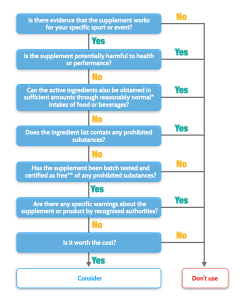
Source: Jeukendrup & Gleeson, Sport Nutrition (Human Kinetics)
Key Takeaway
✔ Supplement use should follow a structured evaluation process.
Walk into any supplement store and you will see hundreds of products promising performance benefits. Pre-workouts, fat burners, recovery formulas, “natural testosterone boosters,” BCAAs, glutamine, multi-ingredient stacks, branded proprietary blends — the marketing is sophisticated and the claims are bold.
However, the majority of these products either lack meaningful evidence of performance benefit, contain doses too low to produce the claimed effect, or rely on ingredients that work in test tubes but fail to demonstrate benefit in well-controlled evidence in trained athletes.
This is not a controversial position among researchers. The IOC consensus statement on dietary supplements and the high-performance athlete makes this point directly — most supplements do not work, and the marketing claims surrounding them rarely hold up to rigorous scrutiny.
For professional and elite athletes, the question is not “does this supplement do something in some study somewhere.” Instead, the question is whether it produces a meaningful effect in trained athletes, at appropriate doses, in conditions that resemble actual training and competition demands.
For example, a supplement that produces a 5% improvement in untrained college students after eight weeks may produce nothing in an elite athlete who already operates at a high baseline. A supplement that improves a single physical marker may not translate to any improvement in performance. A supplement that works in cycling time trials may not transfer to combat sports or team sports with different demands.
This is why position stands and consensus statements from major organizations matter. They synthesize the evidence across populations, training statuses, and doses, and identify what actually holds up.
Key Takeaway
✔ The majority of sports supplements on the market do not produce meaningful performance benefits in professional and elite athletes. Therefore, the evidence base — not marketing claims — is the only reliable filter.
The Australian Institute of Sport (AIS) Sports Supplement Framework is the most practical and rigorous classification system available for professional sport. It groups supplements into four categories based on the strength of the evidence supporting their use.
Group A includes supplements with strong scientific support for performance or health benefits when used in the right context. As a result, these are the supplements most likely to actually help an elite athlete.
This group includes performance supplements such as caffeine, creatine, beta-alanine, sodium bicarbonate, and dietary nitrate, alongside sports foods (sports drinks, gels, recovery products, electrolyte replacements) and medical supplements addressing specific deficiencies such as iron, vitamin D, calcium, and certain probiotics.
This category includes supplements with some supportive evidence but where the data is not yet conclusive. Therefore, use within professional sport typically falls within research or individualized trial settings under supervision. Examples include collagen, curcumin, ketone esters, fish oil, vitamin C and E in specific contexts, and some polyphenols.
This group includes the vast majority of supplements on the market. These have failed to demonstrate consistent benefit in trained athletes, lack adequate study, or show evidence too weak to justify routine use. Examples include BCAAs, glutamine, most “fat burners,” HMB in trained athletes, and a long list of branded proprietary blends.
The final category includes substances either banned by WADA or carrying such high contamination risk that elite athletes should not use them. This includes prohormones, ephedrine, certain herbal stimulants, and any product with vague or proprietary blend labeling that cannot be verified.
Key Takeaway
✔ The AIS Framework provides a practical evidence-based classification: Group A supplements have strong support, Group B is emerging, Group C is unsupported, and Group D is banned or unsafe. Notably, most products marketed to athletes fall into Group C.
Caffeine has more performance evidence behind it than almost any other supplement. It improves endurance performance, sprint performance, repeated-sprint ability, and mental performance under fatigue. In addition, it reduces perceived effort, which is part of why it works.
The effective dose is 3 to 6 mg/kg of body weight, taken approximately 60 minutes before performance. However, higher doses do not produce additional benefit and increase the risk of side effects such as gut problems, elevated heart rate, and disrupted sleep if taken too late in the day.
WADA does not ban caffeine at any level, making it appropriate for almost all sports. Nevertheless, individual response varies — some athletes are non-responders and others tolerate caffeine poorly — so you should test it in training before competition.
Creatine ranks as one of the most studied supplements in sports science. It improves performance in repeated high-intensity efforts, supports lean mass and strength gains over time, and may have mental benefits under fatigue or sleep deprivation.
The standard protocol calls for 3 to 5 g per day of creatine monohydrate, taken consistently. A loading phase (20 g per day for 5 to 7 days) accelerates saturation but is not necessary. Creatine is safe for long-term use, well-tolerated, and benefits a wide range of sports — particularly those involving repeated sprints, jumps, or high-intensity bursts.
Importantly, creatine monohydrate is the only form with the full weight of evidence behind it. Other forms (creatine HCl, ethyl ester, “buffered” creatine) carry the marketing of “superior” alternatives but show no evidence of additional benefit.
Beta-alanine increases muscle carnosine, a compound that helps neutralize the acid build-up your muscles produce during hard efforts. By raising carnosine levels, beta-alanine helps you sustain high-intensity efforts lasting 1 to 4 minutes, with smaller effects on shorter or longer efforts.
The recommended intake is 3.2 to 6.4 g per day, split across multiple smaller doses to avoid the harmless skin tingling that occurs with larger single doses. However, loading takes 4 to 12 weeks to produce meaningful changes — this is not a same-day intervention.
In practice, beta-alanine is most useful for athletes in sports with sustained high-intensity efforts: rowing, swimming sprints, combat sports, and repeated-sprint team sports.
Sodium bicarbonate works similarly to beta-alanine but neutralizes acid in the blood rather than inside the muscle. As a result, it improves performance in efforts lasting 1 to 7 minutes at high intensity.
The standard dose is 0.2 to 0.4 g/kg of body weight, taken 60 to 180 minutes before performance. However, gut problems are the main limitation — some athletes tolerate bicarbonate poorly, so you should never test it for the first time in competition. Fortunately, newer enteric-coated forms (such as those used in some commercial products) meaningfully improve tolerability.
Dietary nitrate improves how efficiently your body uses oxygen and improves endurance performance, with the largest effects in efforts lasting 5 to 30 minutes. You can also see effects in repeated-sprint performance in some sports.
The typical intake is 6 to 13 mmol of nitrate (approximately 300 to 600 mg), taken 2 to 3 hours before performance. In practice, concentrated beetroot juice shots are the most common form. Effects appear larger in less-trained athletes and may be smaller — though still meaningful — in elite endurance athletes.
| Supplement | Effective Dose | Timing | Best Suited For |
|---|---|---|---|
| Caffeine | 3–6 mg/kg | 60 min pre-performance | Almost all sports |
| Creatine monohydrate | 3–5 g/day | Daily, consistent | Repeated high-intensity efforts |
| Beta-alanine | 3.2–6.4 g/day, split doses | Daily for 4–12 weeks | 1–4 min high-intensity efforts |
| Sodium bicarbonate | 0.2–0.4 g/kg | 60–180 min pre-performance | 1–7 min high-intensity efforts |
| Dietary nitrate | 6–13 mmol nitrate | 2–3 h pre-performance | 5–30 min endurance efforts |
Key Takeaway
✔ A small group of performance supplements — caffeine, creatine, beta-alanine, sodium bicarbonate, and dietary nitrate — have strong evidence behind them when dosed and timed correctly. As a result, these are the only performance supplements that consistently meet the bar for use in professional sport.
Vitamin D deficiency is common in athletes, particularly those training indoors, in northern latitudes, or with limited sun exposure. Deficiency affects bone health, muscle function, immune function, and possibly performance.
Athletes with documented low vitamin D status — confirmed through a blood test (the standard marker is 25-hydroxyvitamin D, with values below 50 nmol/L indicating deficiency and 75 nmol/L often considered optimal) — should consider supplementation. Typical doses range from 1,000 to 2,000 IU per day for maintenance, with higher doses required for correction of deficiency under medical supervision.
However, routine high-dose supplementation in athletes who already show sufficient levels does not produce performance benefit and is not recommended.
Iron deficiency — with or without anemia — is one of the most common performance-limiting issues in athletes, particularly female athletes, endurance athletes, and athletes following plant-based diets.
Athletes should consider iron supplementation when iron-related blood markers (ferritin, transferrin saturation, hemoglobin) confirm deficiency. However, self-supplementation without testing carries risk because excess iron is harmful and absorption is poor without indication.
Therefore, a sports physician or sports dietitian should guide treatment, with retesting to confirm response.
Omega-3 fatty acids — specifically EPA and DHA, the active components of fish oil — support cardiovascular health, reduce inflammation, and may support recovery from hard training. However, the evidence for direct performance enhancement is weaker, although the evidence for health and recovery benefits is reasonable.
Typical intakes are 2 to 3 g per day of combined EPA and DHA from a quality, third-party tested fish oil. Athletes consuming 2 to 3 servings of fatty fish per week may not need supplementation.
These are the most commonly relevant foundational supplements, but the principle applies broadly: foundational supplements should follow individual blood work, dietary assessment, and sport-specific demands — not a one-size-fits-all stack.
Key Takeaway
✔ Foundational supplements — vitamin D, iron, omega-3 — can meaningfully support performance, but only when individualized based on blood work and dietary assessment. In other words, they are not universal additions.
BCAAs (branched-chain amino acids). Marketed for muscle protein synthesis, recovery, and reduced soreness. However, in athletes consuming adequate total protein, BCAAs add nothing meaningful. Instead, whole food protein and high-quality protein supplements deliver BCAAs in context with all the other amino acids needed for muscle protein synthesis.
Glutamine. Marketed for immune function and recovery. However, the evidence for performance benefit in trained athletes is weak. Although it may have modest immune benefits in extreme circumstances, this does not justify routine use.
HMB (β-hydroxy β-methylbutyrate). Some evidence exists in untrained populations during initial adaptation. However, in trained athletes, the evidence for performance or body composition benefit is weak.
ZMA (zinc, magnesium, B6). Marketed for testosterone, recovery, and sleep. However, the evidence for the testosterone claims is poor, and dosing of individual nutrients is often more useful when targeted to documented deficiencies.
Tribulus terrestris and “natural testosterone boosters.” Despite the marketing, no reliable evidence supports testosterone elevation or performance benefit in athletes with normal testosterone levels. Many products in this category also carry contamination risk.
Most “fat burners” and stimulant blends. Effects typically come from caffeine combined with proprietary ingredients of unclear evidence. As a result, the risk of contamination and adverse effects often outweighs any benefit.
Most multi-ingredient pre-workouts. Often, these contain effective doses of caffeine but combined with sub-effective doses of other ingredients. Consequently, they cost more and are less reliable than caffeine alone.
Key Takeaway
✔ Most heavily marketed supplements — BCAAs, glutamine, ZMA, “testosterone boosters,” fat burners, and most pre-workout blends — do not produce meaningful performance benefits in professional and elite athletes. In short, the marketing budget does not reflect the evidence.
For an athlete subject to anti-doping testing, supplements are one of the highest-risk categories of inadvertent violations. Evidence analyzing commercial supplements has repeatedly found contamination with banned substances — including muscle-building steroids, stimulants, and other banned compounds — in products that do not list these substances on the label.
The principle of strict liability applies in anti-doping. If testers find a banned substance in your sample, you are responsible — regardless of whether the contamination was unintentional, whether the supplement carried contamination, or whether you knew the product was not safe. Careers have ended over this.
For professional athletes, the only acceptable supplements are those that have undergone third-party testing for banned substances. The most recognized programs include:
These programs are not perfect, but they represent the highest practical standard available. Therefore, a product without third-party certification carries unacceptable risk for any athlete subject to testing.
Key Takeaway
✔ Supplement contamination is a real and significant risk for professional athletes. The principle of strict liability in anti-doping means an athlete carries responsibility for any banned substance found in their sample, regardless of intent. Therefore, only third-party tested products (Informed Sport, NSF Certified for Sport, HASTA) deserve consideration.
The framework for an evidence-based supplement strategy is straightforward. However, the discipline lies in applying it consistently.
Supplements cannot fix a poorly constructed diet. Energy availability, carbohydrate intake matched to training load, adequate protein, fluid balance, sleep, and recovery all carry more impact than any supplement on the market. As a result, athletes who skip these foundations and chase supplements consistently underperform athletes who get the basics right.
Foundational supplements (vitamin D, iron, omega-3) should follow blood work and dietary assessment, not assumption. Therefore, working with a sports physician and sports dietitian to identify and address deficiencies produces the largest health and performance returns.
Group A performance supplements (caffeine, creatine, beta-alanine, sodium bicarbonate, dietary nitrate) deserve consideration based on the demands of your sport and your individual response. In practice, this means three things: test in training, confirm tolerability, and use the right dose at the right time.
Every supplement you use must carry third-party testing. No exceptions. Confirm the certification status before purchase.
Most products marketed to athletes are not worth using. Branded blends, “natural” testosterone boosters, fat burners, and most multi-ingredient pre-workouts add cost, complexity, and risk without meaningful benefit.
| Step | Priority | Action |
|---|---|---|
| 1 | Foundation | Diet, sleep, recovery, training |
| 2 | Health | Blood work, address deficiencies (vitamin D, iron, omega-3) |
| 3 | Performance | Group A supplements based on sport demands |
| 4 | Safety | Third-party certification, no exceptions |
| 5 | Discipline | Avoid unsupported products and stacks |
Key Takeaway
✔ A professional athlete’s supplement strategy is built in layers: get the foundation right, address documented deficiencies, add evidence-based performance supplements where relevant, verify third-party certification, and ignore the noise. As a result, the athletes who follow this framework outperform those who chase trends.
The supplement industry will continue to grow. New products, new claims, and new social media trends will continue to compete for athletes’ attention and money. However, the evidence base evolves slowly — and the small group of supplements that actually work has not changed dramatically in the past decade.
For professional and elite athletes, the cost of getting supplement decisions wrong is meaningful. Money spent on unsupported products is money not spent on better food, recovery, or performance support. Time spent managing complex supplement stacks is time not spent on the foundations of training, sleep, and nutrition. In the worst case, a contaminated product can end a career.
The athletes who get this right are not the ones with the most supplements. Instead, they are the ones who treat supplements as the smallest, most carefully chosen part of their performance strategy — supporting a foundation built on training, recovery, and whole food nutrition.
Key Takeaway
✔ The right supplement strategy is small, evidence-based, individualized, and third-party tested. In short, a supplement stack is not a substitute for training, sleep, and nutrition — it is a small addition that, when done right, can support performance at the margins where it matters most.
Competing in hot and humid conditions places additional stress on the body. Heart rate climbs faster than expected, the same pace begins to feel harder, and fatigue arrives earlier than it would in cooler conditions.
Heat does not just make competition uncomfortable. It changes how your body cools itself, holds onto fluid and salt, handles fueling, and recovers afterward. For professional and elite athletes, these are not minor adjustments. Therefore, they are the difference between performing at your level in the heat and watching your performance decline before the second half even begins.
Most athletes know hydration matters more in the heat. However, far fewer have a sport-specific, individualized strategy that addresses fluid balance, sodium replacement, fueling, gut tolerance, and recovery as one connected system. Generic advice was not built for athletes performing at the top of their sport in conditions that exceed 90°F (32°C) and 70% humidity.
This article covers what happens to your body in the heat, what the evidence shows about how to manage it, and how to build a practical strategy that holds up under real competition demands.
When you compete in the heat, your body prioritizes cooling. Blood flow shifts toward the skin to release heat, which leaves less blood available for working muscles. As a result, heart rate climbs at any given output, perceived effort rises, and sustaining intensity becomes harder.
The math behind this is unforgiving. Your body operates at roughly 20% efficiency — meaning that for every 100 watts of work you produce, your body also produces 400 watts of heat. In a cool environment, this heat load is manageable. However, in a hot, humid environment, your body has fewer tools to release it, so core temperature climbs faster and cardiovascular strain compounds.
Athletes who normally train in cooler climates feel this faster. Because their bodies are less adapted to managing large heat loads, they overheat sooner, run higher heart rates at the same workload, and reach fatigue earlier than athletes who train regularly in hot conditions.
A second effect develops across the duration of competition. As exercise continues in the heat, heart rate gradually rises while stroke volume — the amount of blood pumped per beat — decreases. This is called cardiovascular drift, and it affects athletes even when they are well-hydrated.
Two factors drive it. First, blood flow to the skin keeps rising as core temperature climbs. Second, progressive fluid loss through sweat reduces blood volume. As a result, the heart has to beat faster and faster to deliver the same amount of blood to working muscles. Consequently, athletes commonly experience a heart rate that is 10 to 20 beats per minute higher than normal for the same workload across a hot session — even before any meaningful dehydration develops.
Cardiovascular drift is one of the main reasons sustaining intensity in the heat becomes progressively harder, and one of the reasons performance decline shows up later in events rather than from the start.
Sweat losses rise rapidly in the heat. Most athletes lose 1 to 2 L per hour during moderate to hard sessions in cool conditions. However, in the heat, that range can shift to 2 to 3 L per hour or more in elite athletes — and individual values can be higher still.
These losses include both water and sodium. If you do not replace them adequately, blood volume drops, your ability to cool yourself becomes less effective, and the cardiovascular strain you were already managing becomes worse.
Athletes not adapted to heat tend to start with lower sweat rates and higher sweat sodium concentrations than acclimatized athletes. As a result, they retain less heat-clearing capacity early and lose proportionally more sodium per liter of sweat — both of which compound the cardiovascular strain described above.
One of the most overlooked consequences of heat is reduced gut tolerance. As blood flow shifts toward the skin, less blood is available for the digestive system. As a result, large volumes of fluid or food during competition often become harder to tolerate. Athletes who train without issue at 90 g/h of carbohydrate in cool conditions may struggle at 60 g/h in the heat.
This has direct implications for fueling strategy. Specifically, the carbohydrate target you have been training with is not automatically the right target on a hot competition day.
Heat stress also shifts the body toward greater carbohydrate use at any given intensity. As a result, athletes burn through muscle glycogen faster in hot conditions than in cool conditions at the same workload. This raises the total carbohydrate demand of a session — even though, as covered above, the gut may tolerate less carbohydrate at the same time.
The combined effect is that fueling becomes both more important and harder to execute. Therefore, smaller, more frequent intakes are the practical answer to this constraint.
Key Takeaway
✔ Heat increases cardiovascular strain, drives cardiovascular drift across competition, accelerates fluid and sodium losses, reduces gut tolerance, and speeds glycogen depletion — and these effects compound. Therefore, addressing one without the others leaves performance on the table.
Sweat rate varies enormously between athletes. In hot conditions, some athletes lose less than 1 L per hour while others exceed 3 L per hour in the same session. Body size, training status, heat acclimatization, training intensity, and clothing or equipment all influence the rate at which you sweat.
The implication is that generic hydration advice does not work in the heat. For example, an athlete with a 1 L/hour sweat rate and an athlete with a 3 L/hour sweat rate need fundamentally different protocols. Therefore, individual sweat testing — measuring body mass change before and after a session, accounting for fluid intake and urine output — is the foundation of any serious heat hydration strategy.
The goal during competition is not to replace every milliliter of fluid lost. Instead, it is to limit the deficit to a level that does not meaningfully impair performance.
A commonly cited threshold is that body mass losses exceeding around 2% begin to impair endurance performance and decision-making. The exact threshold varies by athlete, sport, environment, and duration of effort. However, what is consistent is that larger deficits carry larger consequences — a 1% loss may produce mild thirst and minimal performance impact, while a 4 to 5% loss produces severe performance decline and elevates heat illness risk.
For team sports with limited drinking opportunities, the practical implication is that you cannot rely on thirst alone. As a result, athletes who drink to thirst in hot conditions consistently under-replace fluid losses.
Key Takeaway
✔ Sweat rates in the heat vary from under 1 L/hour to over 3 L/hour between athletes. Therefore, individual sweat testing is the foundation of any serious hydration strategy, and the goal is to limit body mass loss to a level that does not meaningfully impair performance.
Sweat is not just water. It contains sodium at concentrations that vary widely between athletes — from roughly 200 mg/L in low sweat sodium athletes to over 1,500 mg/L in high sweat sodium athletes (often identifiable by visible salt residue on skin or kit after training).
When sweat volumes climb in the heat, sodium losses scale with them. For example, a heavy, salty sweater training for two hours in hot conditions can lose 4 to 6 grams of sodium in a single session. As a result, replacing only fluid without addressing sodium leaves you exposed to performance decline, muscle cramping, and in extreme cases hyponatremia (dangerously low blood sodium) from over-drinking plain water.
Sodium plays a central role in performance and hydration:
For sessions exceeding 60 to 90 minutes in the heat, sodium-containing fluids are not optional. Specifically, they are a core part of the hydration strategy. Therefore, sports drinks, oral rehydration solutions, electrolyte tablets in water, and salty foods alongside fluid all serve this purpose.
Individual sweat sodium concentration is best measured through sweat testing — covered in detail in the hydration foundation article.
Key Takeaway
✔ Sodium losses scale with sweat volume and are highly individual. Therefore, for heavy or salty sweaters competing in the heat, deliberate sodium replacement is essential — not a backup plan.
Heat does not reduce your carbohydrate requirement. If anything, performance in the heat shifts the body toward greater carbohydrate use at any given intensity, accelerating glycogen (your body’s stored carbohydrate) depletion. As a result, the total carbohydrate demand of a hard session in the heat is often higher than the same session in cool conditions.
However, the gut does not always agree with what the muscles need. Reduced blood flow to the digestive system in the heat means that the carbohydrate intake you tolerate in training may not be tolerable in competition. Consequently, this is one of the most common reasons athletes underperform in the heat — they push the same fueling protocol they use in cool conditions and end up with gut problems.
The evidence supports the following approach for competition in the heat:
The form matters too. In the heat, carbohydrate-electrolyte drinks deliver fuel and fluid at the same time and are often better tolerated than gels or solid foods. As a result, smaller, more frequent intakes generally hold up better than large amounts taken in one go.
This is also where the principle of training the gut becomes critical. Gut tolerance is trainable. Therefore, athletes who plan to compete in the heat should rehearse their fueling protocol in hot training conditions — not test it for the first time on competition day.
Key Takeaway
✔ Carbohydrate needs do not drop in the heat, but gut tolerance does. Therefore, smaller, more frequent intakes — typically 30 to 60 g/hour for sessions over 2 hours in extreme heat — are often more practical than the higher targets that work in cool conditions.
No supplement, no cooling strategy, and no fueling protocol matches the effect of proper heat acclimatization. When athletes go through 7 to 14 days of repeated, structured heat exposure, the body responds with measurable changes that affect how it handles heat at every level.
These changes build on each other. When an athlete arrives in hot conditions fully acclimatized, they have more blood available for working muscles, cool more efficiently, hold onto more sodium, run a lower heart rate, and feel less of the strain — all from the same physical effort. As a result, the combined effect on performance is far larger than any single change on its own.
The bulk of changes develop within the first 7 to 10 days. Specifically, heart rate and core temperature responses adapt fastest, followed by sweat rate, with sweat sodium conservation taking the longest. Therefore, full adaptation needs around 14 days of regular exposure.
For athletes traveling to hot competition environments — European footballers playing summer pre-season tours, northern-climate tennis players at the Australian Open, NFL teams traveling to hot stadiums, motorsport drivers competing in tropical conditions — building this window into the schedule is one of the highest-impact decisions available.
Heat acclimatization requires repeated exposure to hot conditions. In practice, this typically combines:
For athletes living and training in cooler climates, traveling to a hot location for 2 to 3 weeks of natural acclimatization is not always possible. Sauna-based heat acclimation is a well-supported alternative. Specifically, regular post-training sauna sessions can produce many of the same adaptations — blood volume expansion, lower heart rate at a given workload, improved heat tolerance — without requiring relocation.
A practical sauna acclimation protocol looks like this:
Hot-water immersion (40°C / 104°F bath for 30 to 40 minutes post-training) can produce similar effects when sauna access is not available. As a result, athletes in cooler climates have viable options for building heat tolerance before traveling to hot competitions.
Once an athlete has acclimatized, the changes need ongoing exposure to hold. After 1 to 2 weeks without heat exposure, the changes begin to fade. As a result, athletes who acclimatize and then return to cool conditions before competition may lose part of the benefit. Therefore, the practical answer is to keep heat exposure going right up to competition where possible — through training in hot conditions, sauna sessions, or arriving at the competition venue with enough time for re-exposure.
Key Takeaway
✔ Heat acclimatization is the single most powerful tool available for performance in hot conditions. Therefore, when athletes go through 7 to 14 days of structured exposure — whether through natural heat or post-training sauna protocols — the body produces changes no supplement or cooling strategy can match.
Heat preparation does not start at warm-up. Hydration status in the days leading into competition directly affects how well your body cools itself when it matters. As a result, daily fluid and sodium intake should be consistent and adequate, and any large fluid debts from training should be addressed before competition.
Carbohydrate availability also matters. Specifically, glycogen stores should be optimized through normal high-carbohydrate intake in the 24 to 48 hours pre-competition, particularly for events lasting longer than 90 minutes.
The pre-competition meal — typically 3 to 4 hours before start time — should be carbohydrate-rich, easy to digest, and low in fat and fiber. Fat and fiber slow how fast food leaves your stomach, which is the last thing you want before a hot competition where gut tolerance is already going to be reduced.
A smaller carbohydrate-rich snack 60 to 90 minutes before start time tops up your energy without overloading the gut. Furthermore, final fluids in the 30 to 60 minutes before start time bring you to optimal hydration without producing pre-competition urinary urgency.
For competition in extreme heat, pre-cooling has meaningful evidence behind it. The mechanism is straightforward: lowering core temperature before competition creates a larger buffer before the body reaches the temperatures that limit performance. As a result, athletes can train or compete harder for longer before heat strain becomes the limiting factor.
The main pre-cooling tools are:
These can be combined depending on what is practical in your sport. For example, ice slurry plus an ice towel before warm-up plus a cooling vest during pre-match preparation is a stacked strategy that has been used by elite teams at major tournaments in hot conditions.
Ice slurry is the most practical and well-supported pre-cooling tool for most sports. Specifically, the slush state means the body uses energy to melt the ice in your gut, creating a heat sink effect that lowers core temperature more effectively than cold drinks alone.
A practical ice slurry protocol:
Ice slurry is most effective for endurance and team sports competing in hot conditions. As a result, it has become a standard pre-competition tool for elite marathoners, triathletes, footballers in summer competition, tennis players at hot-weather Grand Slams, and rugby players in summer touring fixtures.
Menthol is one of the more interesting heat-specific tools and works through a very different mechanism than ice slurry or cold water immersion. Specifically, menthol does not lower core temperature. Instead, it triggers cold receptors in the mouth and throat that signal coolness to the brain, improving thermal comfort and the perceived effort of competition in the heat.
In practice, menthol can be used as:
The evidence base has grown over the past decade, with meaningful effects on running performance, perceived heat strain, and willingness to sustain intensity in hot conditions. As a result, menthol has become a low-cost, low-risk addition to the heat strategy of elite endurance athletes — particularly in events where every margin matters.
| Timing | Priority |
|---|---|
| 24–48 hours pre-competition | Hydration consistency, optimized carbohydrate intake |
| 3–4 hours pre-competition | Main meal — carbohydrate-rich, low fat and fiber |
| 60–90 minutes pre-competition | Small carbohydrate-rich snack |
| 30–45 minutes pre-competition | Ice slurry, cold drinks, final fluids |
| 10–20 minutes pre-competition | Cooling vest, ice towels, cold water immersion where available |
| During competition | Menthol mouth rinse where thermal comfort is a limiter |
Key Takeaway
✔ Heat preparation begins 24 to 48 hours before competition, not at warm-up. Therefore, hydration consistency, optimized glycogen stores, easily digestible pre-competition meals, ice slurry pre-cooling, and menthol all contribute to performance in extreme conditions.
Some athletes and coaches worry that caffeine raises dehydration risk in the heat and therefore should be avoided. However, current evidence does not support this concern. Specifically, the diuretic effect of caffeine is small and largely offset in athletes who drink it regularly, and the performance benefits of caffeine — improved endurance, reduced perceived effort, sharper mental performance — apply in hot conditions just as they do in cool conditions.
Standard caffeine protocols (3 to 6 mg/kg of body weight, 60 minutes before competition) remain appropriate in the heat. Therefore, heat is not a reason to eliminate caffeine from a competition strategy. The caffeine article in this catalog covers protocols and dosing in more detail.
Glycerol hyperhydration involves drinking glycerol alongside large volumes of fluid before competition to expand total body water and blood volume. The mechanism is well-known, and some evidence supports performance benefits in long, hot events.
However, this is a situational strategy rather than a routine recommendation:
Therefore, glycerol may have a role for ultra-endurance athletes, marathoners, and triathletes competing in extreme heat where access to fluid during competition is limited. However, for most professional athletes in most contexts, optimizing routine hydration and acclimatization produces better returns.
Several commonly marketed approaches lack supporting evidence:
Key Takeaway
✔ Caffeine remains appropriate in the heat. Furthermore, glycerol hyperhydration is a niche tool for specific endurance contexts. However, many other heat-marketed supplements lack supporting evidence and add cost without performance benefit.
Recovery after competition in hot conditions is more demanding than after the same competition in cool conditions. Specifically, sweat losses are larger, sodium losses are larger, glycogen depletion is greater, core temperature stays raised for longer, and ongoing sweating after the final whistle continues to produce fluid loss.
The standard recovery framework — rehydration, sodium, carbohydrate, protein — still applies. However, the difference in the heat is that the volumes of fluid and sodium are meaningfully higher.
Key Takeaway
✔ Recovery in the heat requires more aggressive fluid and sodium replacement than recovery in cool conditions. Therefore, standard carbohydrate and protein protocols still apply, but the volumes of fluid and sodium needed alongside them are meaningfully higher.
Not every heat strategy carries the same weight of evidence or the same practical impact. As a result, the athletes who perform best in hot conditions tend to focus on the highest-impact tools first.
Key Takeaway
✔ The most effective heat strategy is acclimatization plus individualized hydration plus sodium plus carbohydrate plus pre-cooling. Specifically, this combination consistently outperforms any individual supplement or strategy, and most heat-marketed products do not survive the evidence test.
Several recurring errors undermine performance in hot conditions, even among experienced professional athletes:
When practitioners apply the same protocol across athletes, conditions, and sessions, they ignore the substantial individual variability in sweat rate and sodium losses. As a result, the same plan will overhydrate one athlete and underhydrate another.
Thirst is a late signal in cool conditions and an even later signal in the heat. As a result, athletes who rely on thirst consistently arrive at the second half already meaningfully dehydrated.
Because gut tolerance drops in the heat, the protocol that works at 65°F may produce gut problems at 95°F. Therefore, adjustment is required.
Pre-cooling, fueling protocols, and hydration plans should be rehearsed in hot training conditions. Specifically, competition day is not the place to test a new approach.
Heavy and salty sweaters often need much more sodium than they realize. For example, symptoms like persistent muscle cramping and salt residue on kit are warning signs.
When athletes travel from cooler climates to hot competition environments and skip dedicated acclimatization — including sauna-based alternatives when natural heat exposure is not available — they arrive at a meaningful and entirely avoidable disadvantage. As a result, no supplement, fueling protocol, or pre-cooling strategy makes up for the absence of acclimatization.
When athletes replace only the fluid lost — without addressing sodium, ongoing losses, and the longer recovery window — they leave themselves underprepared for the next session.
Key Takeaway
✔ The most common heat-related performance errors are generic plans, drinking to thirst, mismatched fueling, untested protocols, and skipping acclimatization. However, each is correctable with deliberate preparation and individualization.
A complete heat strategy spans four phases — preparation, pre-competition, in-competition, and recovery — and each phase builds on the others.
| Phase | Key Actions |
|---|---|
| Preparation (10–14 days out) | Heat acclimatization (natural or sauna-based), individual sweat testing, rehearse fueling and pre-cooling protocols |
| Pre-competition (24–48 hours out) | Maintain hydration consistency, optimize glycogen, manage pre-competition meal and snack timing |
| In-competition | Drink to a planned protocol, sodium-containing fluids, moderate carbohydrate intake, menthol and cooling where available |
| Recovery | Replace 125–150% of fluid losses with sodium, restore glycogen, support muscle repair, active cooling |
Key Takeaway
✔ A complete heat strategy requires preparation, pre-competition setup, in-competition execution, and aggressive recovery — applied consistently and individualized to your sweat rate, sodium losses, and competition demands.
Performance in the heat is one of the most evidence-based and immediately actionable areas of sports nutrition. The physiology is well understood, the strategies are well supported, and the difference between athletes who perform in hot conditions and athletes who decline is rarely about innate tolerance. Instead, it is about preparation, individualization, and execution.
Heat increases cardiovascular strain, drives cardiovascular drift across competition, accelerates fluid and sodium losses, and disrupts gut tolerance. Each of these effects can be managed — but only with a strategy that addresses all of them at the same time. Specifically, hydration without fueling falls short. Fueling without sodium falls short. Therefore, none of it works without acclimatization and rehearsal.
For professional and elite athletes, heat is not an occasional inconvenience. Instead, it is a recurring competitive variable that affects preseason camps, summer tournaments, international travel, and championship competitions. Therefore, treating heat preparation as a core part of your performance plan — not an afterthought — is what separates athletes who hold up in extreme conditions from those who fade.
Key Takeaway
✔ Performance in the heat depends on heat acclimatization, individualized hydration, deliberate sodium replacement, structured fueling, pre-cooling, and aggressive recovery. The cost of competing in the heat cannot be eliminated, but it can be substantially reduced — and at the elite level, that reduction is what wins competitions.
Travel is one of the most underestimated performance variables in professional sport. Long-haul flights, time zone changes, irregular meal timing, dehydration in the cabin, disrupted sleep, and exposure to airport food environments all combine to create a cumulative cost that shows up in the days following arrival. Moreover, for athletes flying multiple times per month, these effects build up across a season.
Evidence regularly shows that performance is measurably impaired after long-haul travel — particularly when crossing multiple time zones. Reaction time slows, mental performance drops, immune function declines, and physical output is reduced for several days. Therefore, travel nutrition is not a peripheral concern. It is one of the highest-leverage variables in modern professional sport.
This article covers what happens to the body during travel, how nutrition before, during, and after flights protects performance, and the practical strategies elite athletes use to arrive ready to compete.
Cabin humidity on commercial flights typically drops to 10 to 20%, far below the 30 to 60% considered comfortable. As a result, fluid loss speeds up through breathing and skin evaporation. A long-haul flight can produce fluid losses of 1 to 2 liters even when the passenger feels normal. Dehydration is one of the most consistent effects of long flights.
Long-haul travel across multiple time zones disrupts your body clock. The brain’s master clock is anchored to local light and meal timing patterns. When these signals shift abruptly, hormone rhythms, sleep timing, mood, and mental performance all fall out of sync until adjustment occurs.
The combination of dehydration, sleep disruption, exposure to recycled cabin air, and travel stress measurably suppresses immune function for several days after long-haul flights. As a result, illness risk rises during a window when athletes can least afford it.
Sleep during and after travel is rarely high quality. In-flight sleep is fragmented by noise, position constraints, light exposure, and raised cortisol (your main stress hormone). Moreover, post-arrival sleep is disrupted by the mismatch between your body clock and local time, often for several nights.
The cumulative effect is measurable performance decline. Elite athletes show reduced reaction time, impaired decision-making, lower power output, and reduced peak power for one to several days after long-haul travel — proportional to the number of time zones crossed and the direction of travel.
Key Takeaway
✔ Long-haul travel produces dehydration, body clock disruption, immune suppression, sleep disruption, and measurable performance decline. Therefore, treating travel nutrition as a peripheral concern is a meaningful performance error.
Travel preparation begins before the airport. The 24 to 48 hours before a long-haul flight set the foundation for how well the body handles the disruption ahead.
Arriving at the airport well-hydrated is essential. This is not about drinking large volumes immediately before departure. Instead, it means regular fluid intake across the day with adequate sodium, so blood volume is full going into the cabin environment.
The meal eaten before departure should be familiar, well-tolerated, and balanced. Complex carbohydrates, protein, and healthy fats produce more stable blood sugar than fast-absorbing or heavy options. As a result, the athlete arrives at the airport without energy swings that add to travel stress.
Alcohol the night before a long flight worsens hydration, sleep, and body clock adjustment. Moreover, too much caffeine right before travel can make dehydration worse and disrupt sleep timing during the flight. Therefore, both should be limited or avoided in the 24 hours before long-haul travel.
When traveling east — the direction that produces the most difficult adjustment — gradual sleep timing shifts in the days before departure can reduce post-arrival jet lag. Going to bed 30 to 60 minutes earlier each night for 2 to 3 nights before an eastward flight begins the body clock shift before the flight itself.
Key Takeaway
✔ Travel preparation begins 24 to 48 hours before departure. Therefore, hydration, balanced meals, limited alcohol and caffeine, and pre-loaded sleep timing all set the foundation for how well the body handles the flight.
Decisions during the flight have an outsized effect on arrival readiness. Cabin food, beverage choices, sleep timing, and movement all combine to either support or undermine post-arrival performance.
Drink steadily throughout the flight. Water is the foundation, but electrolyte drinks support fluid retention on long-haul flights, especially for athletes who arrive at the airport already at the lower end of hydration. Aim for 200 to 300 mL per hour during long-haul flights.
Alcohol during flights worsens dehydration, fragments sleep, and makes jet lag worse. Therefore, athletes should avoid it entirely on long-haul flights, regardless of how much is offered.
Caffeine during flights should be timed to the destination time zone, not the departure zone. A coffee at the right local time supports body clock adjustment, while caffeine at the wrong local time prolongs it.
Meal timing during flights is one of the most powerful tools for body clock adjustment. Eating on destination time — even before arrival — speeds up adaptation. Therefore, athletes flying east should consider skipping the in-flight meal that conflicts with destination time and eating only when meals align with the local schedule on arrival.
Sleep timing during flights should support post-arrival adjustment, not in-flight comfort:
Periodic movement during long flights supports circulation, reduces stiffness, and may slightly help with jet lag. Walking the aisle every 1 to 2 hours, stretching at the seat, and avoiding extended periods in the same position all support arrival readiness.
Key Takeaway
✔ In-flight nutrition decisions — hydration, alcohol avoidance, caffeine timing, meal timing on destination time, strategic sleep, and periodic movement — directly shape arrival readiness. Therefore, treating the flight as active preparation rather than passive transit is essential.
The first 24 to 48 hours after arrival are critical for body clock adjustment, recovery from travel stress, and restoring performance readiness.
Full rehydration after the flight is a multi-hour process. Athletes should drink fluid with sodium across the hours after arrival, monitor urine color, and avoid relying on a single large drink to “catch up.”
Eating on local time from the moment of arrival speeds up body clock adjustment. This is true even when the athlete is not particularly hungry — meal timing acts as a body clock signal independent of caloric need.
Light exposure is the most powerful body clock signal available. Morning sunlight on local time anchors the new rhythm faster than any nutritional tool. Therefore, athletes should prioritize getting outdoors in natural daylight on the first morning after arrival.
The first night after arrival sets the tone for adjustment. Holding out until local bedtime — even if exhausted — produces faster adjustment than napping or going to bed early. Moreover, melatonin under professional guidance can support sleep onset on the first one to two nights when the time zone change is significant.
Balanced meals across the first 24 hours support recovery from travel stress. Adequate protein, carbohydrate, fluids, and a wide range of vegetables and fruits provide the nutritional foundation the body needs to adjust quickly.
Intense training in the first 24 to 48 hours after long-haul travel can add to fatigue rather than relieve it. Light movement, walks, and gentle technical work support adjustment, while heavy training should generally wait until day two or three depending on the time zone change.
Key Takeaway
✔ The first 24 to 48 hours after arrival shape adjustment. Therefore, deliberate hydration, meal timing on local time, sunlight exposure, holding out until local bedtime, and avoiding heavy training all speed return to performance readiness.
| Phase | Primary Priority |
|---|---|
| 24–48 hours before | Hydration, balanced meals, limited alcohol and caffeine, pre-loaded sleep shift if eastward |
| At the airport | Hydration top-up, avoid heavy or unfamiliar foods, prepare for in-flight strategy |
| First half of flight | Hydration, light familiar food, sleep if eastward |
| Second half of flight | Continued hydration, meal on destination time, caffeine on destination time |
| First 6 hours after arrival | Hydration restoration, meal on local time, sunlight exposure |
| First night | Hold to local bedtime, controlled light exposure, melatonin if appropriate |
| Day 1–2 after arrival | Light training, continued hydration, meal timing, sunlight |
Key Takeaway
✔ A successful travel day is built on a sequence of decisions — pre-flight, in-flight, and post-arrival — all aligned to support hydration, body clock adjustment, and recovery. Therefore, planning the travel day with the same care as a competition day is one of the highest-leverage habits in elite sport.
Travel is part of professional sport. The athletes who compete at the highest level fly more, across more time zones, in tighter schedules than ever before. Moreover, the cumulative effect of poorly managed travel shows up in performance, illness rates, and career length.
However, travel does not have to be a performance liability. Athletes who treat travel nutrition as a structured discipline — hydration before, during, and after; deliberate meal and caffeine timing; strategic sleep; and proactive body clock adjustment — arrive readier to perform and recover faster from each trip.
At the elite level, travel nutrition is not optional preparation. It is one of the highest-return investments a professional athlete can make in their performance and health across a long, global career.
This article covers the general principles of travel nutrition. Furthermore, future articles in sport-specific series will address how travel nutrition is applied for football across European competitions, tennis on the global tour, golf across continents, and motorsport across the F1 and MotoGP calendars.
Key Takeaway
✔ Travel nutrition is the deliberate management of hydration, meal timing, sleep, and body clock adjustment across the full travel window. Therefore, the athletes who plan it regularly arrive ready to perform — while the athletes who do not pay the cost on the field.
Carbohydrate loading is one of the oldest strategies in sports nutrition. It has been studied for over 50 years and remains one of the most evidence-based interventions available to elite athletes. However, it is also one of the most misunderstood. Many athletes apply it incorrectly, use it for events where it offers no benefit, or skip it for events where it could meaningfully improve performance.
At its core, carbohydrate loading is the deliberate manipulation of training and nutrition in the days before competition to maximize muscle glycogen stores. Moreover, when applied correctly, it allows athletes to start competition with full fuel tanks, sustain higher-intensity efforts for longer, and delay the onset of fatigue.
This article covers what carbohydrate loading actually does, when it matters, when it does not, and how elite athletes use it to compete with full glycogen stores.
Muscle glycogen (your body’s stored carbohydrate) is the primary fuel for high-intensity training and competition. It is the form of carbohydrate stored in the muscles for immediate use during effort. Moreover, when glycogen runs low, performance declines — pace drops, perceived effort rises, decision-making suffers, and the ability to produce repeated high-intensity efforts is impaired.
Glycogen depletion is one of the primary causes of fatigue in events lasting longer than 90 minutes at high intensity. Therefore, starting competition with maximally filled glycogen stores delays the onset of fatigue and supports performance through the later stages.
A well-fueled athlete typically stores around 400 to 500 grams of glycogen across their muscles and liver in normal conditions. However, with deliberate carbohydrate loading, this can rise to 700 to 900 grams — a 50 to 100% increase in available fuel. This additional fuel translates directly into improved performance in events where glycogen depletion is the limiting factor.
The mechanism is straightforward. When carbohydrate intake is high and training volume is reduced, the muscles take up and store more glycogen than they would under normal conditions. The combination of dietary intake and reduced glycogen use during training produces the storage gain.
Key Takeaway
✔ Carbohydrate loading increases muscle glycogen stores beyond normal baseline. Therefore, when glycogen depletion is the limiting factor, loading directly improves performance.
Not every athlete benefits from carbohydrate loading. The strategy is most effective for events where glycogen depletion is genuinely the limiting factor.
Generally, the longer and more intense the event, the more carbohydrate loading benefits performance. Conversely, for shorter events, the focus should be on day-of fueling, hydration, and gut comfort rather than fully loaded glycogen stores.
Key Takeaway
✔ Carbohydrate loading benefits long, high-intensity events where glycogen depletion is the limiting factor. Therefore, the strategy should be matched to the demands of the sport, not applied universally.
The original carbohydrate loading protocols from the 1960s were complex — involving 7-day depletion-then-loading cycles with hard training and very low carbohydrate intake before the loading phase. However, modern evidence has produced simpler, equally effective protocols that do not require depletion.
Well-trained athletes can achieve maximal glycogen stores with 24 to 48 hours of:
For a 75 kg athlete, this means around 600 to 900 grams of carbohydrate per day across the loading phase. Moreover, the carbohydrate should come from familiar, well-tolerated sources — not introduced for the first time before a key competition.
Practical carbohydrate sources for loading include:
Reducing fiber intake during the final 24 hours before competition supports gut comfort and reduces stool volume. This means leaning on lower-fiber carbohydrate sources — white rice over brown, white bread over whole grain, peeled potatoes, and lower-fiber fruits like bananas and melon.
Key Takeaway
✔ The modern carbohydrate loading protocol is 24 to 48 hours of high carbohydrate intake (8 to 12 g/kg/day) combined with reduced training. Therefore, athletes can achieve maximal glycogen stores without complex multi-day depletion cycles.
Glycogen does not store dry. Every gram of glycogen is stored alongside roughly 3 grams of water. Therefore, a successful carbohydrate load also produces meaningful weight gain — typically 1 to 2 kg — which is water and glycogen together, not fat.
This has several practical implications:
Moreover, athletes should not interpret the weight gain as fat or attempt to offset it through calorie restriction. Doing so undermines the entire purpose of loading.
Key Takeaway
✔ Glycogen is stored with water at roughly 3 grams water per gram glycogen. Therefore, the weight gain during loading is expected and desirable, and adequate hydration is essential to support the process.
Female athletes may respond differently to carbohydrate loading depending on the phase of the menstrual cycle. Evidence suggests that glycogen storage capacity is somewhat reduced during the follicular phase compared to the luteal phase, though the practical significance varies between individuals.
Athletes using hormonal contraception or with irregular cycles may show different responses. Therefore, individualization based on training and competition data matters more than rigid protocols.
Key Takeaway
✔ Female athletes may respond differently to carbohydrate loading across the menstrual cycle. Therefore, individualized testing and adequate energy availability are essential to ensure the protocol delivers its expected benefit.
Begin gradually increasing carbohydrate intake while reducing training volume. Training tapers in the days before competition naturally reduce glycogen use, supporting storage.
Carbohydrate intake should reach 8 to 12 g/kg/day. Fluid intake should increase moderately to support glycogen-water storage. Sodium intake should be deliberate.
Carbohydrate intake remains high, but fiber intake should decrease to support gut comfort. This is when refined carbohydrate sources — white rice, white bread, low-fiber fruits — replace higher-fiber alternatives.
The pre-competition meal — typically 3 to 4 hours before competition — provides the final top-up of carbohydrate, modest protein, and fluid. The meal should be familiar, well-tolerated, and timed to allow digestion before competition starts.
| Time Before Competition | Carbohydrate Intake | Training | Other |
|---|---|---|---|
| 3 days out | Begin increasing toward 8–10 g/kg | Light training | Normal hydration |
| 48 hours out | 8–12 g/kg per day | Rest or very light | Increased fluid and sodium |
| 24 hours out | 8–12 g/kg per day, reduced fiber | Rest | Familiar low-fiber options |
| Day of competition | Pre-competition meal 3–4 hours before | Warm-up only | Final hydration top-up |
Key Takeaway
✔ Effective carbohydrate loading is a structured 24 to 48 hour process built around increased carbohydrate intake, reduced training, adequate hydration, and tested foods. Therefore, planning the protocol in advance is essential.
Athletes sometimes load for events that do not require it. Loading for a 5K run, a strength competition, or a short-duration sport offers no performance benefit and may cause gut problems.
Athletes sometimes try unfamiliar foods during the loading phase. This is the worst possible time to test new strategies — competition day is not the moment to discover an intolerance.
The volumes of carbohydrate required for true loading are larger than most athletes realize. Hitting 8 to 12 g/kg per day requires deliberate planning, not casual increases. Therefore, athletes should weigh and track their intake during the first attempt to confirm they are actually loading.
Skipping the fiber reduction step in the final 24 hours can lead to gut problems on competition day. High-fiber carbohydrate sources are excellent for daily nutrition but can cause problems immediately before competition.
Key Takeaway
✔ The most common loading mistakes are loading for the wrong events, introducing new foods, underestimating intake volume, and skipping fiber reduction. Therefore, rehearsing the protocol in training is essential.
Carbohydrate loading is one of the most evidence-based, well-established strategies in sports nutrition. When applied to events where glycogen depletion is the limiting factor, it produces measurable improvements in performance.
However, it is not universal. Loading for the wrong event wastes effort and can cause discomfort without delivering benefit. Therefore, the decision to load should match the demands of the sport, the duration of the competition, and the individual athlete’s response.
At the elite level, carbohydrate loading is a tool, not a default. Athletes who use it strategically — for the right events, with tested protocols, and with attention to hydration and sodium — gain a real and reproducible performance advantage.
This article covers carbohydrate loading as a general principle. Moreover, future sport-specific articles will address how loading is applied within individual sports — including football, tennis, combat sports, and endurance disciplines.
Key Takeaway
✔ Carbohydrate loading is the deliberate manipulation of training and nutrition to maximize glycogen stores before competition. Therefore, when matched to the right event and applied with a tested protocol, it is one of the highest-evidence interventions available to elite athletes.
Hydration is one of the most underestimated variables in professional football. The difference between a player who is sharp in the 85th minute and one who fades in the 70th is often not fitness or talent. Instead, it is hydration status going into the match and the decisions made about fluid and sodium replacement during it.
A footballer can lose 1 to 2 liters of fluid in a 90-minute match, sometimes more in heat or humidity, with substantial sodium loss in heavy sweaters. Moreover, even a fluid deficit of 2% of body mass measurably impairs sprint performance, technical execution, and decision-making. Therefore, hydration and sodium replacement during matches must be treated as a structured strategy, not an afterthought.
This article covers what happens to fluid and electrolyte balance across a match, why sodium is as important as fluid, and the practical protocols elite footballers use to stay sharp from the first whistle to the last.
A footballer’s fluid losses begin during the warm-up and continue through both halves. Sweat rates of 1.0 to 1.5 liters per hour are typical in temperate conditions, with rates exceeding 2 liters per hour in hot, humid environments. As a result, even a player who arrives at the match well-hydrated can finish at a meaningful deficit if in-match replacement is inadequate.
The effects of fluid loss show up before the player feels thirsty. Fluid deficits as small as 2% of body mass — roughly 1.5 kg in a 75 kg player — measurably impair sprint speed, decision accuracy, technical execution, and tactical awareness. By the time thirst becomes obvious, performance has already declined.
Sodium loss compounds the problem. This electrolyte drives fluid retention. As sodium leaves the body in sweat, the ability to hold onto consumed fluid decreases. Moreover, blood volume — the liquid component of blood that carries oxygen and nutrients to working muscles — drops faster when sodium is not replaced.
Drinking too much plain water during long matches in hot conditions can cause hyponatremia (dangerously low blood sodium) — a serious problem that impairs performance and, in severe cases, requires medical attention. Therefore, hydration is not just about volume. It is about the right combination of fluid and sodium for the individual player and the match conditions.
Key Takeaway
✔ Fluid loss and sodium loss build across a match and impair performance before the player feels thirsty. Therefore, hydration during matches requires both fluid and sodium replacement, planned around individual needs.
A player who arrives at kick-off well-hydrated has options across the match. A player who arrives at a deficit does not.
Hydration begins the day before, not in the locker room. Consistent fluid and sodium intake across the 24 hours leading into the match builds a baseline that supports performance from the opening whistle.
Practical principles:
The pre-match meal — typically 3 to 4 hours before kick-off — should include adequate fluid alongside carbohydrate and protein. Extra fluid intake in the 1 to 2 hours before the match should be moderate and timed to allow for bathroom visits before the warm-up.
The warm-up itself produces fluid loss that should not be ignored. Drinking 200 to 400 mL of fluid with sodium in the 15 to 30 minutes before kick-off can offset warm-up sweat loss without causing fullness.
Key Takeaway
✔ Pre-match hydration is built across the 24 hours before kick-off, not in the locker room. Therefore, a well-hydrated player at the first whistle is the result of consistent intake leading up to the match.
Football offers limited in-match hydration opportunities. Fluid intake must happen during natural stoppages, drinks breaks where allowed, and at half-time — the single largest opportunity available.
Within the run of play, opportunities to drink are short and inconsistent. Taking advantage of every available moment matters — corner kicks, set pieces, fouls, and stoppages provide brief windows to take small amounts of fluid.
In hot conditions, league rules in many competitions now require cooling breaks. When temperature and humidity exceed defined thresholds, a structured drinks break around the 30th minute of each half allows meaningful fluid and sodium intake. Players should use these breaks deliberately, not casually.
Half-time is the most important hydration window of the match. The 15-minute break allows players to consume meaningful volumes of fluid and sodium, refuel with carbohydrate, and prepare physically for the second half.
Practical guidelines for half-time:
Like the first half, in-match opportunities during the second half are limited. The half-time intake must be planned to carry the player through to the final whistle, with smaller top-ups taken during natural stoppages.
Key Takeaway
✔ Half-time is the primary in-match hydration window. Therefore, a deliberate combination of fluid, sodium, and carbohydrate at half-time directly supports second-half performance.
Most commercial sports drinks contain 400 to 700 mg of sodium per liter. For many players in moderate conditions, this is adequate. However, for heavy sweaters or salty sweaters, particularly in heat, this falls short.
Several practical markers suggest a player loses more sodium than average:
For these players, deliberate sodium-fortified drinks, sodium tablets, or salty foods at half-time provide more sodium than standard sports drinks. Doses can range from 600 to 1,500 mg or more across the half-time break for the heaviest sodium losers.
Sodium intake should be tested in training before being used in competition. Gut tolerance varies between players, and unfamiliar concentrations can cause gut problems at the worst possible moment.
Key Takeaway
✔ Heavy sweaters and salty sweaters require more sodium than standard sports drinks provide. Therefore, personalized sodium replacement — tested in training first — is essential for these players.
Matches in heat and humidity demand a more aggressive hydration approach. Sweat losses can double, sodium losses rise proportionally, and the effects of inadequate replacement appear faster.
Key strategies for hot weather matches:
Moreover, in tournaments played in extreme heat, recovery hydration between matches becomes as important as in-match replacement. Therefore, the strategy extends beyond the 90 minutes.
Key Takeaway
✔ Hot weather matches require more aggressive hydration and sodium replacement than temperate matches. Therefore, the strategy must scale with the conditions and the individual player.
While dehydration is the more common problem, overhydration is the more dangerous one. Hyponatremia occurs when athletes consume large volumes of plain water without adequate sodium replacement.
The risk is highest in:
Therefore, the hydration strategy must include sodium, especially during long matches in challenging conditions. Moreover, the goal is balance — replacing what is actually lost, not drinking as much as possible.
Key Takeaway
✔ Hyponatremia is rare but dangerous. Therefore, hydration during matches must include sodium, and players should drink to a plan rather than to maximum tolerance.
Hydration and sodium replacement during matches are among the most actionable, evidence-based variables in professional football. The players who arrive well-hydrated, replace fluid and sodium deliberately at half-time, and adapt their strategy to conditions regularly outperform those who treat hydration as an afterthought.
Pre-match hydration determines how a player starts. Half-time replacement determines how they finish. Personalizing the approach — based on sweat rate, sweat sodium concentration, and match conditions — is what separates a generic protocol from an effective one.
At the elite level, hydration is not optional preparation. It is one of the highest-leverage decisions a player makes on match day.
This article covers in-match hydration. Moreover, the foundation hydration article and the post-match recovery article complete the framework, with future articles in the football series addressing match-day fueling, congested fixture management, and tournament hydration.
Key Takeaway
✔ Hydration and sodium replacement during matches are personalized strategies built around sweat rate, sodium losses, and match conditions. Therefore, planning, testing, and individualizing the protocol is one of the clearest ways an elite footballer can sustain performance for the full 90 minutes.