• Home
  • About
    • Meet Shantih
    • The FFN Method
    • The FFN Process
  • Services
    • 1 On 1 Sports Nutrition Coaching
    • Elite On-Site
    • Team Audit
    • ISAK Sport Anthropometry
  • Elite Sports Nutrition
    • Team Sports Nutrition
    • Individual Sports Nutrition
  • Blog
  • eBook
  • Contact Us

Athlete Application
  • Home
  • About
    • Meet Shantih
    • The FFN Method
    • The FFN Process
  • Services
    • 1 On 1 Sports Nutrition Coaching
    • Elite On-Site
    • Team Audit
    • ISAK Sport Anthropometry
  • Elite Sports Nutrition
    • Team Sports Nutrition
    • Individual Sports Nutrition
  • Blog
  • eBook
  • Contact Us
May 21, 2026

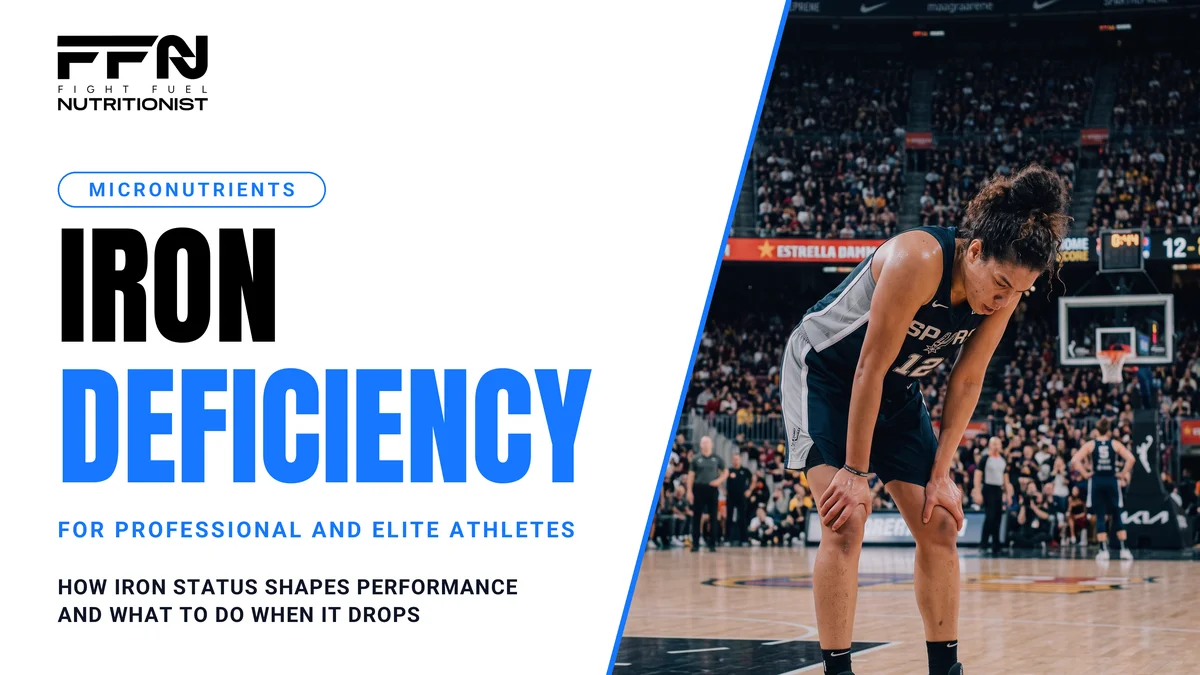
Iron Deficiency in Professional Athletes

How iron status shapes performance, and what to do when deficiency develops Iron deficiency is one of the most comm...

SERVICES

  • 1 On 1 Coaching
  • Elite On-Site
  • Team Audit
  • ISAK Sport Anthropometry

ABOUT

  • Meet Shantih
  • The FNN Method
  • The FFN Process

Elite Sports Nutrition

  • Team Sports Nutrition
  • Individual Sports Nutrition

Contact

  • Contact Us
  • Resources
  • Success Stories
Copyright © 2026 FFN Privacy Policy Terms Of Use

Table of Contents

×
  • How iron status shapes performance, and what to do when deficiency develops
      • Key Points
      • Why Iron Matters for Performance
        • The roles of iron in the body
        • What iron deficiency feels like
      • Why Athletes Are at Higher Risk
        • The general picture
        • How training itself contributes
        • Who is at highest risk
      • How Iron Deficiency Develops in Stages
        • Stage 1: Low iron stores (non-anemic)
        • What stage 1 means in practice
        • Stage 2: Reduced iron transport (non-anemic)
        • What stage 2 means in practice
        • Stage 3: Iron deficiency anemia
        • What stage 3 means in practice
        • Why early identification matters
      • How Iron Status Is Properly Tested
        • What to measure
        • Standardizing the test
        • Working with a sports physician
      • Prevention: Eating for Iron
        • Dietary iron — heme versus non-heme
        • What helps iron absorption
        • What blocks iron absorption
        • Practical recommendations
      • Treatment: When Diet Is Not Enough
        • When to consider supplementation
        • How oral iron supplements work
        • When iron infusion or injection becomes relevant
        • What about iron injection?
      • Common Mistakes Athletes Make With Iron
        • Self-supplementing without testing
        • Treating the symptom without finding the cause
        • Ignoring the post-training absorption window
        • Pairing iron with coffee, tea, or large dairy meals
        • Stopping supplementation too early
        • Expecting fast results
      • Practical Application: Building an Iron Management Plan
        • Step 1: Starting test
        • Step 2: Identify risk factors
        • Step 3: Build eating patterns that support iron status
        • Step 4: Check periodically
        • Step 5: Treat under medical guidance when needed
        • Step 6: Consider medical iron infusion when oral iron fails
      • Conclusion
      • References
→ Index