
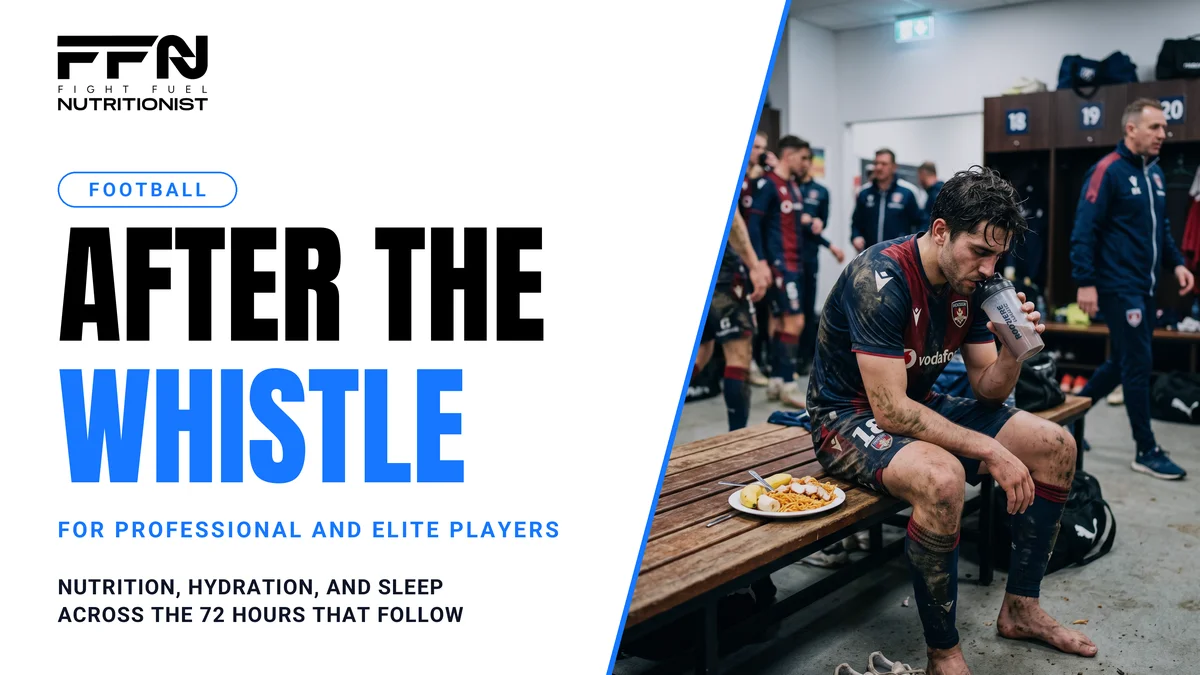
Sports nutrition, hydration, and sleep in the hours after the final whistle shape next-match readiness
The hours after a match decide more than most players realize. Post-match recovery is where the body restores glycogen, repairs muscle damage, replaces fluid and electrolytes, regulates hormonal balance, and prepares the nervous system for the next demand. Moreover, every one of these processes is shaped by what the player eats, drinks, and how they sleep in the hours immediately after the final whistle.
In professional football, the recovery window is rarely long. Midweek fixtures, congested schedules, and the demands of European competition mean that players often have 48 to 72 hours, sometimes less, before the next match. The nutrition and lifestyle decisions made in the post-match window carry forward directly into the next performance.
This article covers what happens during post-match recovery, why nutrition, hydration, and sleep are the three foundations, and what an evidence-based approach looks like at the elite level.
Key Points
- Post-match recovery directly influences performance in the next match
- Glycogen depletion, muscle damage, fluid and sodium loss, and hormonal disruption all peak after a match
- Carbohydrate and protein intake in the first hour drive recovery quality
- Total fluid and sodium replacement matters more than what is consumed in the locker room alone
- Sleep is the most powerful recovery tool available and often the most compromised
- Late-finish matches present specific challenges for nutrition and sleep timing
- Congested fixture periods compress every recovery window and amplify the cost of small mistakes
- Recovery is a 24 to 72 hour process, not a post-match snack
What Actually Happens After a Match
A 90-minute match leaves the body in a measurably different state than it started. Several processes occur at the same time and must all be addressed during recovery.
Glycogen depletion
Muscle glycogen (your body’s stored carbohydrate) is heavily depleted during a match. Depletion can range from 40 to 90% depending on position, playing style, and match intensity. Glycogen restoration is the rate-limiting step for next-match readiness. Therefore, carbohydrate intake in the hours after a match is one of the highest-priority recovery actions.
Muscle damage and inflammation
The repeated sprints, jumps, accelerations, decelerations, and impacts of a match cause meaningful muscle damage. The lengthening contractions that happen during deceleration and direction changes produce micro-trauma that drives soreness, reduced power output, and slower recovery in the days that follow.
Fluid and sodium loss
Fluid losses during a match commonly reach 1 to 2 liters, with substantial sodium loss in heavy sweaters or in hot conditions. As a result, blood volume is reduced, electrolyte balance is disrupted, and rehydration becomes a multi-hour process — not a single bottle of water on the way out.
Hormonal disruption
Post-match cortisol (your main stress hormone) is elevated, testosterone is suppressed, and your nervous system stays in action mode for hours. This state delays sleep onset, reduces sleep quality, and impairs the recovery processes that depend on shifting back into recovery mode.
Mental and emotional load
The mental and emotional demands of a match produce mental fatigue that lingers well after the physical demands subside. Moreover, this can affect sleep, mood, and the ability to follow recovery routines if not managed deliberately.
Key Takeaway
✔ A match leaves players glycogen-depleted, muscle-damaged, dehydrated, hormonally elevated, and mentally fatigued. Therefore, post-match recovery must address all five domains, not just one.
The Nutrition Priorities After the Final Whistle
Carbohydrate replacement
Carbohydrate intake drives glycogen restoration. The first 60 to 90 minutes after the match represent a window of elevated insulin sensitivity and faster glycogen synthesis. This period should not be wasted.
Practical principles:
- 1.0 to 1.2 grams of carbohydrate per kilogram of body weight in the first hour
- High glycemic carbohydrates work well in this window because rapid absorption matters more than blood sugar stability
- Continue carbohydrate intake at regular intervals across the next several hours, especially when the next match is within 48 hours
- Liquid carbohydrate sources can supplement solid food when appetite is suppressed immediately after the match
Protein for muscle repair
Protein supports muscle repair and supplements glycogen synthesis when combined with carbohydrate. 0.3 to 0.4 grams of protein per kilogram of body weight in the first hour is an evidence-based target. Moreover, protein intake should continue at multiple points across the recovery window — typically every 3 to 4 hours — to maintain elevated muscle repair and rebuilding.
Quality matters. Protein sources rich in leucine — dairy, meat, fish, eggs, and high-quality protein supplements — produce a stronger muscle-building response than lower-leucine alternatives.
Combined carbohydrate and protein
The combination of carbohydrate and protein in the first hour produces better recovery outcomes than either alone. This is one of the most consistent findings in sports nutrition. Therefore, post-match meals or supplements should always include both.
Practical timing and tolerance
Gut tolerance matters. Players often have reduced appetite immediately after a match. Therefore, liquid options — recovery drinks, milk, smoothies — work well in the locker room, with a more substantial meal following 60 to 120 minutes later.
Key Takeaway
✔ Combine carbohydrate and protein in the first hour after the match, and continue intake at regular intervals across the recovery window. The goal is not a single recovery meal but a sequence of recovery decisions across 24 hours.
Hydration After the Match
Replacing fluid is not as simple as drinking water. Full rehydration requires both fluid and sodium, and it takes longer than most players realize.
Total volume
Players should consume around 125 to 150% of the fluid lost during the match across the hours that follow. Body mass change before and after the match remains the most practical way to estimate net fluid loss.
Sodium replacement
Sodium drives fluid retention. Without it, much of what is consumed is lost as urine before it can restore blood volume. Therefore, post-match rehydration should include sodium — either through electrolyte drinks, salty foods, or a combination.
Heavy sweaters and high sodium losers
Players who sweat heavily or have high sweat sodium concentration require more deliberate replacement. These players should plan rehydration around the demonstrated demand, not generic recommendations.
Alcohol
Alcohol impairs rehydration, disrupts sleep, and delays muscle recovery. Therefore, post-match alcohol consumption directly compromises recovery — especially during congested fixture periods.
Key Takeaway
✔ Full rehydration is a multi-hour process that requires fluid plus sodium. Moreover, alcohol after a match measurably impairs recovery and should be limited or avoided during congested schedules.
Sleep: The Most Powerful Recovery Tool
Sleep is the single most powerful recovery tool available to professional football players. The majority of tissue repair, growth hormone release, and nervous system recovery occur during sleep. However, sleep after matches is often compromised — particularly after late-finish or evening kick-offs.
The challenge of post-match sleep
After a match, cortisol is elevated, the body is still in action mode, and the brain is still processing the mental and emotional demands of the performance. Moreover, late-finish matches followed by travel, media, and post-match meals push bedtime later, compressing total sleep time.
Practical strategies
To protect post-match sleep:
- Begin recovery nutrition early so heavy meals do not occur immediately before sleep
- Limit caffeine in the second half of the match if possible to reduce its impact on sleep onset
- Reduce bright light, especially blue-spectrum light, in the hours after returning home
- Use breathwork or wind-down practices to shift the nervous system out of action mode
- Plan a slightly later wake time the next day where the schedule allows
- Avoid alcohol, which fragments sleep
Daytime naps
When nighttime sleep is compromised, a 20 to 30 minute nap the following day can restore alertness and partially offset the deficit. Naps timed earlier in the afternoon avoid disrupting the next night’s sleep.
Key Takeaway
✔ Sleep is the most powerful recovery tool but also one of the most compromised after matches. Therefore, deliberate management of post-match sleep is one of the highest-leverage recovery actions available.
Recovery Across 24 to 72 Hours
Recovery is not finished an hour after the match. The most important physical repair extends across the following 24 to 72 hours.
Hours 0 to 4
The immediate post-match window is for carbohydrate and protein intake, fluid and sodium replacement, and the start of nervous system wind-down.
Hours 4 to 24
Across the rest of the day and overnight, continued carbohydrate intake, multiple protein feedings, and the first major sleep window drive most of the physical recovery. Sleep quality during this window has an outsized effect on next-day readiness.
Hours 24 to 72
Across the following one to three days, full glycogen restoration, muscle repair, and nervous system recovery continue. Light movement, continued nutrition, and protected sleep across this window allow the player to arrive at the next match ready to perform.
| Time After Match | Primary Recovery Priority |
|---|---|
| 0 to 60 minutes | Carbohydrate and protein, fluid and sodium replacement |
| 1 to 4 hours | Continued nutrition, full meal, rehydration |
| 4 to 12 hours | Multiple protein feedings, hydration, sleep preparation |
| 12 to 24 hours | First major sleep window, mood and mental recovery |
| 24 to 72 hours | Full glycogen restoration, muscle repair, nervous system recovery |
Key Takeaway
✔ Recovery is a 24 to 72 hour process, not a single post-match snack. Therefore, the most successful players treat the window after the final whistle as a sequence of decisions, not a single moment.
Conclusion
Post-match recovery is where football careers are extended or shortened. The players who recover best train better in the days that follow, perform better in the next match, and remain available across long, congested seasons.
Nutrition, hydration, and sleep are the three foundations. Well-timed carbohydrate and protein intake, complete fluid and sodium replacement, and protected sleep produce measurable improvements in next-match performance and reduce the cumulative cost of a long season.
At the professional level, recovery is not a wellness add-on. It is one of the highest-return investments a player can make in their performance and career longevity.
This article addresses post-match recovery. Moreover, future articles in the football series will go deeper into match-day fueling, congested fixture management, body composition, travel nutrition, and supplements for the elite footballer.
Key Takeaway
✔ Post-match recovery is a sequence of nutrition, hydration, and sleep decisions across 24 to 72 hours. Therefore, treating it as a structured process — not an afterthought — is one of the clearest ways an elite footballer can sustain performance across a long season.
References
- Collins J, Maughan RJ, Gleeson M, et al. (2021). UEFA expert group statement on nutrition in elite football. Current evidence to inform practical recommendations and guide future research. British Journal of Sports Medicine, 55(8), 416.
- Ranchordas MK, Dawson JT, Russell M. (2017). Practical nutritional recovery strategies for elite soccer players when limited time separates repeated matches. Journal of the International Society of Sports Nutrition, 14, 35.
- Nédélec M, McCall A, Carling C, Legall F, Berthoin S, Dupont G. (2013). Recovery in soccer: part II — recovery strategies. Sports Medicine, 43(1), 9–22.
- Burke LM, Kiens B, Ivy JL. (2004). Carbohydrates and fat for training and recovery. Journal of Sports Sciences, 22(1), 15–30.
- Beelen M, Burke LM, Gibala MJ, van Loon LJ. (2010). Nutritional strategies to promote postexercise recovery. International Journal of Sport Nutrition and Exercise Metabolism, 20(6), 515–532.
- Jentjens R, Jeukendrup AE. (2003). Determinants of post-exercise glycogen synthesis during short-term recovery. Sports Medicine, 33(2), 117–144.
- Phillips SM, Van Loon LJ. (2011). Dietary protein for athletes: from requirements to optimum adaptation. Journal of Sports Sciences, 29(Suppl 1), S29–S38.
- Shirreffs SM, Sawka MN. (2011). Hydration and fluid replacement. Journal of Sports Sciences, 29(Suppl 1), S39–S46.
- Halson SL. (2014). Sleep in elite athletes and nutritional interventions to enhance sleep. Sports Medicine, 44(Suppl 1), 13–23.
- Fullagar HHK, Skorski S, Duffield R, Hammes D, Coutts AJ, Meyer T. (2015). Sleep and athletic performance: the effects of sleep loss on exercise performance, and physiological and cognitive responses to exercise. Sports Medicine, 45(2), 161–186.
- Barnes MJ. (2014). Alcohol: impact on sports performance and recovery in male athletes. Sports Medicine, 44(7), 909–919.
- Thomas DT, Erdman KA, Burke LM. (2016). Position of the Academy of Nutrition and Dietetics, Dietitians of Canada, and the American College of Sports Medicine: Nutrition and athletic performance. Journal of the Academy of Nutrition and Dietetics, 116(3), 501–528.


