
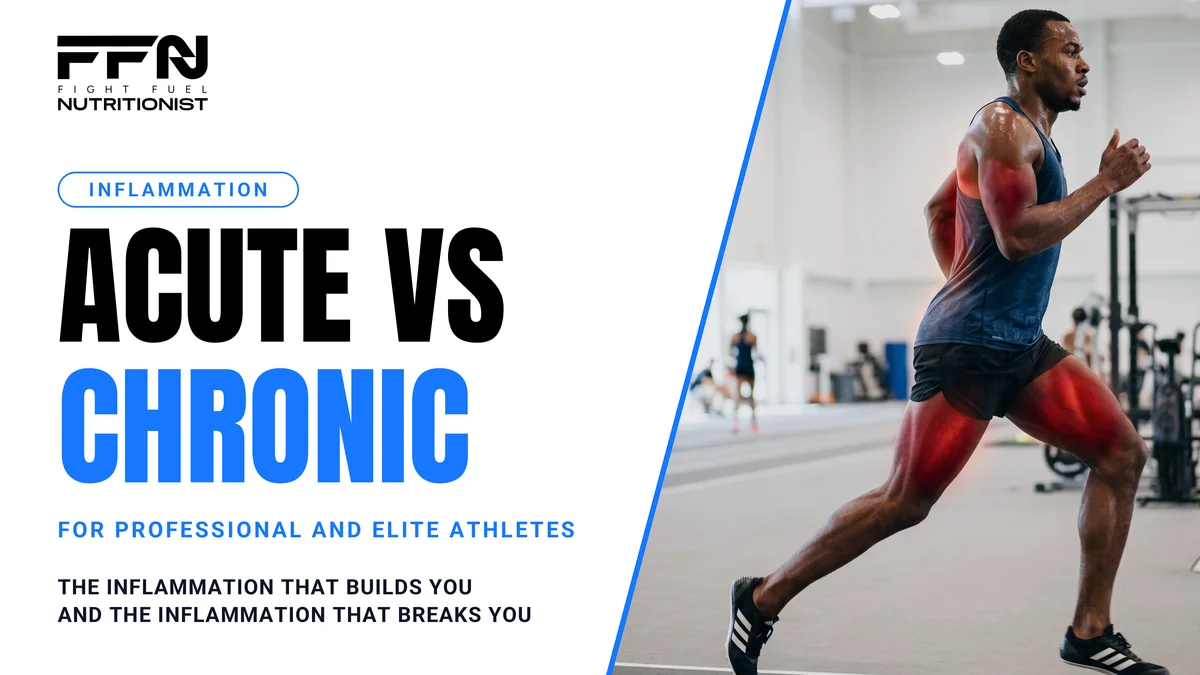
Recovery is one of the most overused and least understood words in professional sport. Athletes hear about it constantly — recovery drinks, recovery boots, recovery days, recovery protocols. However, recovery is not a product or a session. Instead, it is the underlying biology that determines whether the work you put in becomes adaptation or accumulates as fatigue.
Three of the most important drivers of that biology are inflammation, sleep, and nutrition. Each one interacts with the others in ways that directly affect how quickly you bounce back from training, how well you adapt over time, and how durable you remain across a long season.
For professional and elite athletes, getting these three right is not optional. The difference between athletes who maintain performance across a long career and those who break down is rarely about training alone. Instead, it is about whether the supporting biology holds up under the load.
This article covers what the evidence shows about acute and chronic inflammation, sleep and its role in recovery, and how nutrition can support both. Moreover, it explains how to build a practical recovery framework that addresses all three.
Key Points
- Inflammation is not inherently bad — acute inflammation is essential for tissue repair and adaptation, while chronic low-grade inflammation drives disease and impairs recovery
- Athletes generate substantial acute inflammation through training, but their habitually active lifestyle, working muscles, and well-managed nutrition typically protect them from the chronic inflammation seen in inactive populations
- During training, working muscles release signaling chemicals that drive anti-inflammatory effects throughout the body
- Sleep is one of the most powerful and underused recovery tools available — chronic sleep restriction impairs hormonal recovery, immune function, and inflammatory regulation
- Professional athletes consistently sleep less and worse than the general population, particularly during travel, congested schedules, and high training load periods
- Nutrition shifts inflammation through several pathways — energy availability, omega-3 fatty acids, polyphenols, fiber, and protein quality and timing all play roles
- Anti-inflammatory diets such as Mediterranean-pattern eating support long-term inflammatory balance without compromising training adaptations
- Suppressing acute training-induced inflammation with high-dose antioxidants or anti-inflammatory drugs may blunt training adaptations and is generally not recommended
Acute vs Chronic Inflammation: The Critical Distinction
Acute inflammation is necessary
When you train hard, your body produces inflammation. Damaged muscle fibers, the physical strain on your muscles, and the metabolic stress of hard work all trigger an inflammatory response that brings immune cells, growth factors, and repair mechanisms to the area. Without this acute response, training adaptation simply does not occur.
This kind of inflammation is short-term, well-controlled, and self-resolving. It produces the soreness, swelling, and temporary functional decline you feel after a hard session — and then it fades within hours to days as repair completes. It is essential to muscle adaptation, tendon strengthening, and bone remodeling.
For an athlete, suppressing this response with high-dose antioxidants (large amounts of vitamin C and E), aggressive ice exposure timed wrong, or routine NSAIDs (anti-inflammatory drugs like ibuprofen) can blunt training adaptations. Therefore, although acute inflammation feels uncomfortable, it is doing critical work.
Chronic low-grade inflammation is harmful
In contrast, chronic low-grade inflammation is something else entirely. It is a persistent, low-level activation of the immune system that quietly damages tissues over time. Chronic inflammation links to cardiovascular disease, type 2 diabetes, insulin resistance, brain diseases like Alzheimer’s, and many cancers.
In the general population, chronic inflammation is alarmingly common. Estimates suggest more than half of adults show elevated inflammatory blood markers, even without obvious disease. The main drivers are excess body fat (particularly deep belly fat stored around your organs), inactivity, poor sleep, chronic stress, and a diet high in refined carbohydrates, processed meats, and ultra-processed foods.
For professional athletes, the picture is generally protective. Regular high-volume training, low body fat, and well-managed nutrition typically keep chronic inflammatory markers low. However, certain situations — overtraining, prolonged low energy availability, poor sleep across congested schedules, or high travel load — can flip that balance.
Key Takeaway
✔ Acute inflammation drives recovery and adaptation. In contrast, chronic low-grade inflammation drives disease and impairs recovery. Therefore, the goal is not to suppress inflammation, but to keep the right kind active and the wrong kind suppressed.
How Training Affects Inflammation
The protective effect of training
One of the most important findings in exercise immunology over the past two decades is that regular training acts as one of the most powerful anti-inflammatory tools available. Structured training consistently reduces body-wide inflammation, with lower levels of the inflammatory blood markers your doctor can measure (C-reactive protein, IL-6, and TNF-alpha).
These benefits work through several mechanisms:
- Reduced deep belly fat and the inflammatory signals it produces
- A shift in immune cell behavior from pro-inflammatory to anti-inflammatory states
- Lower sensitivity of immune cells to inflammatory triggers
- Direct anti-inflammatory effects of signaling chemicals released during muscle contraction
For professional and elite athletes, this means that your training itself is one of the strongest defenses you have against the chronic inflammatory load that affects the general population.
Working muscles produce their own anti-inflammatory signals
Perhaps the most important finding in this field is that working muscles act as a hormone-producing organ. Contracting muscles release signaling chemicals called myokines (compounds muscles release during training), which communicate with distant tissues and organs throughout the body.
Among these, IL-6 plays a central role. The IL-6 your muscles release during training behaves very differently from the IL-6 released during infection. The IL-6 from working muscles acts as an anti-inflammatory signal — it triggers other anti-inflammatory compounds, shuts down pro-inflammatory ones, supports fat burning, and helps maintain glucose availability for working muscles.
In other words, every hard training session you complete generates a cascade of anti-inflammatory signals that benefits your long-term health and recovery. As a result, this is part of why training, done right, functions as medicine.
Key Takeaway
✔ Regular training is one of the most powerful anti-inflammatory tools available. Moreover, working muscles release signaling chemicals that drive anti-inflammatory effects throughout the body, helping protect athletes from the chronic inflammation seen in inactive populations.
When Inflammation Becomes a Problem for Athletes
The overtraining and underfueling connection
Although athletes typically show low chronic inflammation, certain conditions can flip the balance:
- Overtraining and inadequate recovery. When training load exceeds recovery capacity for sustained periods, inflammatory markers can rise and remain elevated. This links to persistent fatigue, performance decline, and increased illness risk.
- Low energy availability. Athletes who chronically under-eat relative to their training demands — whether intentional for body composition or unintentional from busy schedules — often show signs of immune and inflammatory function out of balance. This is one of the central concerns in Relative Energy Deficiency in Sport, or RED-S (a state where energy intake is too low to support both training and basic bodily functions).
- Poor sleep. Even short periods of sleep restriction increase inflammatory markers in otherwise healthy individuals. For athletes in particular, this compounds with the inflammatory load of training.
- Chronic stress. Psychological stress (from travel, performance pressure, or life demands) elevates cortisol (your main stress hormone) and inflammatory signaling over time.
- Frequent illness and injury. Recurrent infections or unresolved injuries can keep inflammatory pathways activated longer than they should be.
What out-of-balance inflammation looks like
For an athlete, persistent out-of-balance inflammation often shows up as:
- Slow recovery between sessions despite normal training load
- Persistent fatigue that does not resolve with rest
- More frequent upper respiratory infections
- Disturbed sleep despite adequate opportunity
- Stalling adaptations and performance plateau
These symptoms rarely appear from one bad week. Instead, they accumulate over weeks or months when several factors stack: high training load, poor sleep, low energy availability, and inadequate recovery nutrition.
Key Takeaway
✔ Athletes are usually protected from chronic inflammation by their training and lifestyle. However, overtraining, low energy availability, poor sleep, chronic stress, and recurrent illness can flip that balance — producing recovery problems, performance decline, and increased illness risk.
Sleep: The Most Underused Recovery Tool
Why sleep matters for recovery
Sleep is when the majority of recovery actually happens. During deep sleep, growth hormone release peaks, muscle repair and rebuilding runs at its highest rates, glycogen (your body’s stored carbohydrate) stores rebuild, immune function recalibrates, and the brain clears waste from the day’s mental demands.
For professional athletes, sleep affects:
- Physical recovery — muscle repair, glycogen restoration, hormonal balance
- Immune function — illness risk drops sharply with adequate sleep
- Inflammatory balance — sleep deprivation directly elevates inflammatory markers
- Reaction time and decision-making — both decline measurably after one night of restricted sleep
- Skill acquisition and motor learning — sleep consolidates the movement patterns of skill practice
- Injury risk — chronically under-slept athletes show meaningfully higher injury rates
Despite all this, professional athletes sleep less and worse than most people realize.
How much sleep professional athletes actually need
Most elite athletes need more sleep than the general population — typically 8 to 10 hours per night. However, professional athletes consistently average sleep duration well below this, often closer to 6 to 7 hours, particularly during competitive periods and travel.
The factors working against athlete sleep include:
- Late competitions and post-competition activation
- Early morning training sessions
- Travel across time zones and a disrupted body clock
- High caffeine intake, often late in the day
- Pre-competition anxiety and performance arousal
- Light exposure from screens in evening hours
- Hotel environments during travel
Practical sleep strategies for professional athletes
The interventions that consistently improve athlete sleep are not exotic. Instead, they are practical, evidence-based, and underused:
- Consistent sleep timing. Going to bed and waking up at similar times — even on travel days — supports your body clock.
- Sleep environment. A cool (around 18°C / 65°F), dark, quiet room supports deeper sleep. Travel kit (eye mask, earplugs, blackout shades) makes a meaningful difference.
- Caffeine timing. Caffeine has a half-life of 5 to 6 hours. Athletes sensitive to its effects should avoid caffeine within 6 to 8 hours of bedtime.
- Light exposure. Bright light in the morning supports your body clock. Dim, warm light in the 1 to 2 hours before bed supports melatonin release.
- Pre-bed nutrition. A small protein-containing snack 30 to 60 minutes before bed (around 30 to 40 g of casein protein, the slow-digesting protein found in dairy) supports overnight muscle repair and rebuilding without disrupting sleep.
- Naps. Strategic napping (20 to 30 minutes early afternoon, or 60 to 90 minutes for full sleep cycles) can offset shortfalls during congested schedules.
- Travel and time zone strategy. Pre-trip sleep extension, controlled light exposure, melatonin where appropriate, and timed meals all support faster adaptation across time zones.
Key Takeaway
✔ Sleep is one of the most powerful recovery tools available, yet professional athletes consistently get less and lower-quality sleep than they need. 8 to 10 hours per night is the realistic target. Moreover, consistent timing, environment, caffeine management, and travel strategy all support it.
Nutrition Strategies to Support Inflammation, Sleep, and Recovery
The foundation: adequate energy and well-built daily nutrition
The most important nutritional factor for managing inflammation and supporting recovery is meeting energy demands. Athletes who chronically under-eat — whether for body composition reasons or because of busy schedules — show inflammation out of balance, impaired immune function, and slower recovery.
A well-built daily diet for inflammation management and recovery includes:
- Adequate total energy matched to training load
- Sufficient carbohydrate to support training and refill glycogen between sessions
- 1.6 to 2.2 g/kg/day of high-quality protein, distributed across 4 to 6 meals
- Fruits and vegetables across a wide variety (5 to 10 servings per day)
- Whole grains, legumes, and fiber-rich carbohydrates as staples
- Olive oil, nuts, and oily fish as primary fat sources
- Limited intake of ultra-processed foods, refined sugars, and processed meats
This pattern aligns closely with the Mediterranean dietary pattern, which has the strongest evidence for supporting low chronic inflammation and good heart and metabolic health.
Omega-3 fatty acids
EPA and DHA — the active components of fish oil — exert well-documented anti-inflammatory effects. They shift the body’s production of inflammatory compounds toward a more balanced state and become part of cell membranes throughout the body.
For athletes, the practical options are:
- 2 to 3 servings of fatty fish per week (salmon, mackerel, sardines, herring) can meet baseline needs
- For athletes who do not consume fatty fish, supplementation at 2 to 3 g/day of combined EPA and DHA from a quality, third-party tested fish oil is appropriate
- Higher doses (4 g/day or more) may have a role in specific situations such as concussion recovery or post-injury management, under professional guidance
Polyphenols and antioxidant-rich foods
Polyphenols — found in berries, cherries, beetroot, dark chocolate, green tea, coffee, and many fruits and vegetables — exert anti-inflammatory and antioxidant effects through multiple pathways. For example, tart cherry juice has reasonable evidence for supporting recovery from hard training.
However, an important caveat applies. High-dose antioxidant supplementation (large doses of vitamin C and E, particularly around training) may blunt the adaptive response to training. Therefore, the practical approach is to obtain polyphenols from whole food sources rather than from high-dose isolated supplements, particularly in the immediate window around training.
Protein quality and timing
Protein supports muscle repair, immune function, and the synthesis of compounds involved in inflammatory regulation. The practical principles include:
- 1.6 to 2.2 g/kg/day total protein, depending on training load and body composition goals
- Distribution across 4 to 6 meals containing 0.3 to 0.4 g/kg per meal
- High-quality protein sources providing complete amino acid profiles (animal protein, dairy, soy, or appropriately combined plant proteins)
- A pre-sleep protein dose of 30 to 40 g of casein protein can support overnight recovery without disrupting sleep
Fiber and gut health
The gut microbiome plays a meaningful role in inflammatory regulation and immune function. Athletes following a high-fiber, varied diet rich in fermented foods (yogurt, kefir, kimchi, sauerkraut) typically show healthier gut microbiome profiles than those following highly restricted or processed diets.
In practice, the targets are:
- 25 to 35 g/day of fiber from varied plant sources
- 1 to 2 servings of fermented foods per day where tolerated
- Variety in plant food sources (evidence suggests 30+ different plant foods per week supports microbiome diversity)
| Strategy | Practical Action |
|---|---|
| Daily nutrition foundation | Mediterranean-pattern eating, adequate energy and protein |
| Omega-3 fatty acids | 2–3 servings fatty fish/week or 2–3 g/day EPA+DHA supplement |
| Polyphenols | Whole food sources — berries, cherries, vegetables, dark chocolate |
| Protein timing | 1.6–2.2 g/kg/day spread across 4–6 meals; 30–40 g casein pre-sleep |
| Fiber and gut health | 25–35 g fiber/day, fermented foods, plant variety |
| Avoid blunting adaptations | Avoid high-dose antioxidant supplements around training |
Key Takeaway
✔ Nutrition for inflammation and recovery is built on adequate energy, Mediterranean-pattern eating, omega-3 fatty acids, polyphenol-rich whole foods, well-distributed protein, and fiber. Blunting acute training-induced inflammation with high-dose antioxidants is generally counterproductive.
Practical Application: Building a Recovery Framework
A complete recovery strategy spans three integrated pillars — inflammation management, sleep, and nutrition. Each one supports the others, and weakness in any one undermines the whole system.
Pillar 1: Inflammation management
In practice, this means:
- Train hard, but allow adequate recovery between sessions
- Avoid suppressing acute training inflammation with high-dose antioxidants or routine NSAIDs (anti-inflammatory drugs like ibuprofen)
- Monitor for signs of out-of-balance inflammation (persistent fatigue, frequent illness, slow recovery)
- Address overtraining, low energy availability, and chronic stress as priorities
Pillar 2: Sleep optimization
For sleep, the priorities are:
- Target 8 to 10 hours per night
- Maintain consistent sleep and wake timing
- Manage caffeine timing and light exposure
- Plan travel and time zone adjustment deliberately
- Use strategic napping during congested schedules
Pillar 3: Recovery nutrition
Finally, on the nutrition side:
- Build the daily diet around Mediterranean-pattern principles
- Meet energy demands consistently
- Distribute high-quality protein across the day, including pre-sleep
- Include omega-3 fatty acids, polyphenol-rich foods, and adequate fiber
- Use whole food sources rather than isolated high-dose supplements around training
| Pillar | Key Actions |
|---|---|
| Inflammation management | Adequate recovery, avoid blunting acute responses, address chronic drivers |
| Sleep | 8–10 hours, consistent timing, environment and travel strategy |
| Nutrition | Mediterranean pattern, omega-3, polyphenols, distributed protein, fiber |
Key Takeaway
✔ A complete recovery framework integrates inflammation management, sleep, and nutrition. Each pillar reinforces the others, and the athletes who treat all three with discipline recover faster, adapt better, and stay durable across long careers.
Conclusion
Recovery is biology, not a product
Recovery is not something you buy. It is not a session, a piece of equipment, or a supplement. Instead, it is the underlying biology of inflammation, sleep, and nutrition working together to turn training into adaptation. As a result, athletes who get this right outperform athletes who don’t — not just on a single day, but across full careers.
The compounding cost of getting it wrong
For professional and elite athletes, the cost of getting recovery wrong compounds over time. Poor sleep across a competitive period drives inflammation. Inflammation that does not resolve impairs recovery. Impaired recovery leads to underperformance, increased injury risk, and accumulated fatigue. These problems do not show up immediately — they show up weeks or months later, often disguised as bad luck or overtraining.
What the athletes who get it right actually do
The athletes who maintain performance across long careers treat recovery as seriously as training. They protect their sleep, build their nutrition deliberately, monitor for signs of out-of-balance inflammation, and address chronic stressors before they accumulate. None of this is glamorous. However, all of it works.
Key Takeaway
✔ Recovery is the biology that turns training into performance. By managing inflammation, prioritizing sleep, and building nutrition deliberately, professional and elite athletes can recover faster, adapt better, and remain durable across the demands of a long career.
References
- Gleeson M, Bishop NC, Stensel DJ, et al. (2011). The anti-inflammatory effects of exercise: mechanisms and implications for the prevention and treatment of disease. Nature Reviews Immunology, 11(9), 607–615.
- Pedersen BK, Febbraio MA. (2012). Muscles, exercise and obesity: skeletal muscle as a secretory organ. Nature Reviews Endocrinology, 8(8), 457–465.
- Walsh NP, Halson SL, Sargent C, et al. (2021). Sleep and the athlete: narrative review and 2021 expert consensus recommendations. British Journal of Sports Medicine, 55(7), 356–368.
- Halson SL. (2014). Sleep in elite athletes and nutritional interventions to enhance sleep. Sports Medicine, 44(Suppl 1), S13–S23.
- Mountjoy M, Sundgot-Borgen J, Burke L, et al. (2018). IOC consensus statement on relative energy deficiency in sport (RED-S): 2018 update. British Journal of Sports Medicine, 52(11), 687–697.
- Calder PC. (2017). Omega-3 fatty acids and inflammatory processes: from molecules to man. Biochemical Society Transactions, 45(5), 1105–1115.
- Bowtell J, Kelly V. (2019). Fruit-derived polyphenol supplementation for athlete recovery and performance. Sports Medicine, 49(Suppl 1), 3–23.
- Merra G, Noce A, Marrone G, et al. (2021). Influence of Mediterranean diet on human gut microbiota. Nutrients, 13(1), 7.
- Trommelen J, van Loon LJC. (2016). Pre-sleep protein ingestion to improve the skeletal muscle adaptive response to exercise training. Nutrients, 8(12), 763.
- Peake JM, Markworth JF, Nosaka K, Raastad T, Wadley GD, Coffey VG. (2015). Modulating exercise-induced hormesis: does less equal more? Journal of Applied Physiology, 119(3), 172–189.
- Thomas DT, Erdman KA, Burke LM. (2016). Position of the Academy of Nutrition and Dietetics, Dietitians of Canada, and the American College of Sports Medicine: Nutrition and athletic performance. Journal of the Academy of Nutrition and Dietetics, 116(3), 501–528.


